
Glass Table Tops in Amityville, NY
Custom Glass That Actually Fits Your Table

Hear from Our Customers
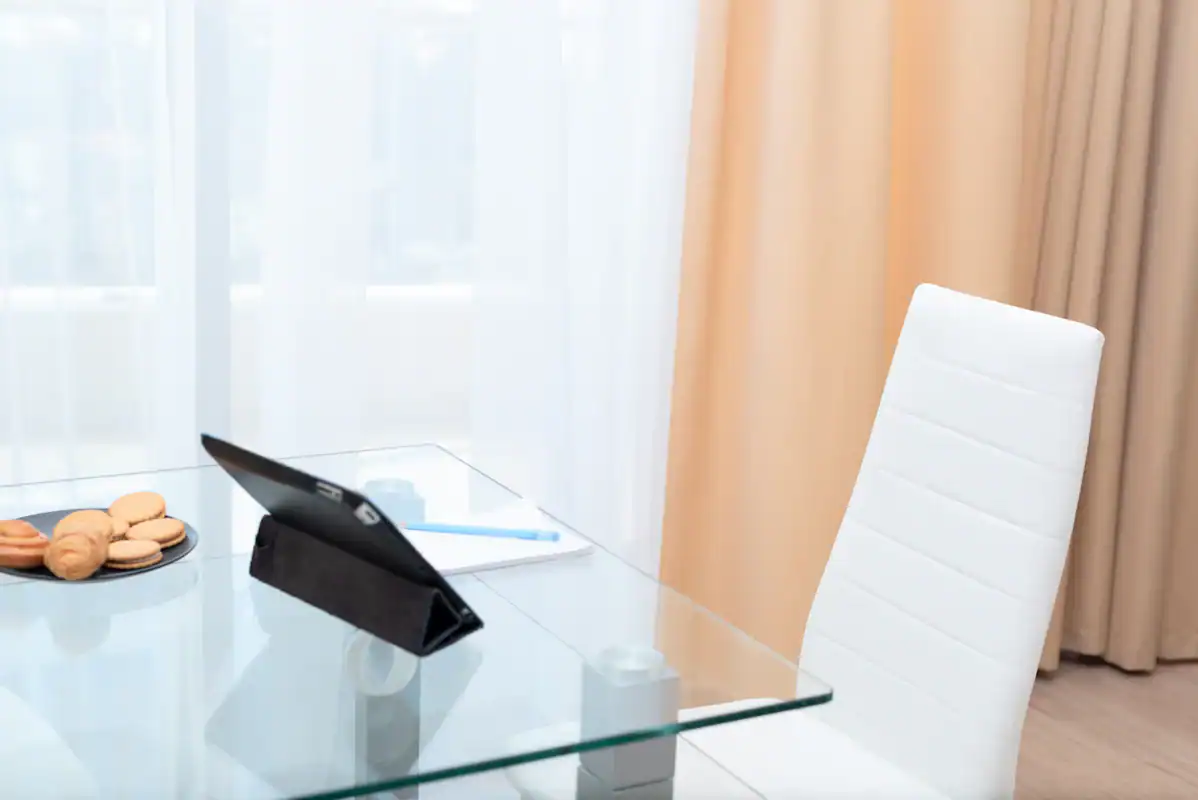
Custom Glass Table Tops Amityville
You’ve invested in quality furniture. Wood that took years to age, finishes that required careful craftsmanship, surfaces that anchor your dining room or office. The last thing you want is to watch water rings, scratches, and sun damage slowly destroy what you paid good money for.
A custom glass table top gives you the protection you need without covering up what makes your furniture worth protecting in the first place. The glass is clear, precisely cut, and strong enough to handle daily use. You get a surface that’s easy to clean, resistant to heat and moisture, and durable enough to last decades.
The difference between a glass top that works and one that doesn’t comes down to three things: accurate measurement, proper thickness for your application, and tempered safety glass. Skip any of those, and you’re either dealing with a piece that doesn’t fit, cracks under normal use, or creates a safety hazard if it breaks. Get all three right, and you have a table top that does its job without you thinking about it.
Glass Services Amityville NY
We’ve been fabricating custom glass for Long Island homeowners and businesses for over 20 years. We specialize in high-end glass projects—from shower enclosures to table tops—with the same level of craftsmanship and attention to detail across every job.
Based in the Long Island community, we hold Better Business Bureau certification and maintain active memberships in the Long Island Builders Institute and the National Kitchen and Bath Association. Our client roster includes Hamptons homes and top regional contractors who rely on clear communication, accurate proposals, and work that’s done right the first time.
For Amityville residents and businesses, that means working with a local team that understands Long Island design preferences, knows how coastal humidity affects furniture, and has the experience to recommend the right glass thickness and edge finish for your specific table. You’re not dealing with a national chain or an online retailer that ships glass and hopes it fits. You’re working with people who measure in person, fabricate to exact specifications, and stand behind their work.
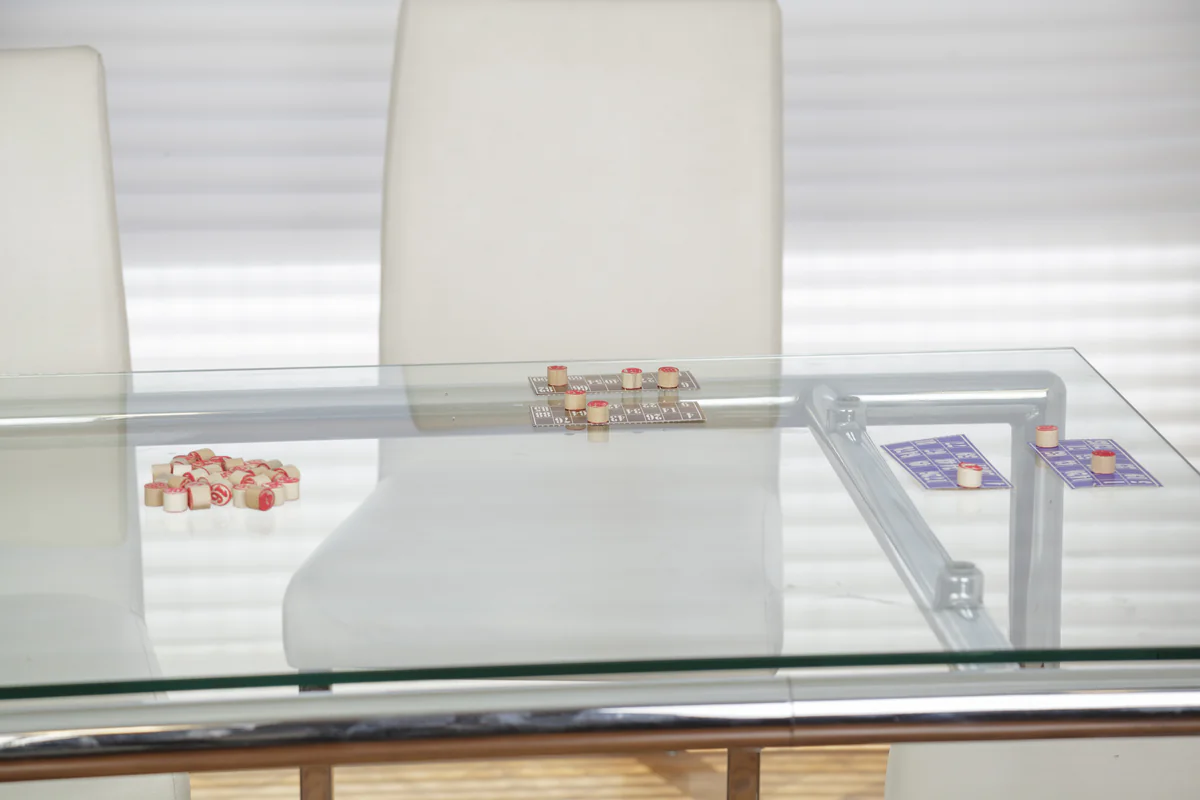
Glass Table Top Installation Process
The process starts with an on-site measurement. Someone from our team comes to your location, measures your table or furniture piece, and discusses what you’re trying to accomplish. Are you protecting an existing wood surface? Creating a standalone glass dining table? Replacing a broken patio table top? The application determines the thickness, edge finish, and glass type you’ll need.
Once measurements are confirmed, you receive a detailed proposal that outlines exactly what you’re getting and what it costs. No vague estimates or surprise fees later. The glass is then custom-fabricated to your specifications—cut to size, edges finished (flat polished, beveled, or pencil edge depending on your preference), and tempered for safety and strength.
Installation is straightforward. For protective covers over existing tables, the glass is placed with clear rubber bumpers or pads to prevent slipping and allow air circulation. For standalone glass tops on metal or wood bases, the glass is secured using appropriate methods based on your table’s design. The entire process is managed with the same attention to detail that goes into our shower door installations—efficient, accurate, and focused on getting it right.

Ready to get started?
Durable Glass Table Covers Amityville
Glass table tops aren’t one-size-fits-all. A protective cover for your coffee table needs different specs than a standalone dining table top. Here’s what actually matters when you’re selecting glass for your furniture in Amityville.
Thickness determines strength and application. If you’re adding a protective layer over an existing wood or metal table, 1/4 inch tempered glass works well for most situations. For dining tables or desks where the glass needs more durability, 3/8 inch is the most common choice—thick enough to handle daily use without excessive weight. Larger tables or standalone glass tops benefit from 1/2 inch thickness, which provides the structural integrity needed for unsupported spans.
Edge finishing affects both safety and appearance. Flat polished edges give you clean, modern lines with a smooth, reflective finish. Pencil edges are rounded and safer for homes with children or high-traffic areas. Beveled edges add an elegant, angled detail that works well on formal dining tables. All edges are polished to eliminate sharpness.
Tempered glass is non-negotiable for table tops. It’s four to five times stronger than regular glass and heat-treated to withstand temperature changes and impact. If it does break—which is rare—it shatters into small, dull cubes instead of dangerous shards. For Long Island homes dealing with sun exposure through windows and temperature fluctuations, tempered glass handles the stress without cracking.
In Amityville and across Nassau County, homeowners deal with coastal humidity that can damage wood furniture over time. A properly fitted glass top creates a barrier against moisture, prevents water rings from drinks, and protects finishes from sun fade. You’re not just adding a surface—you’re extending the life of furniture that would otherwise need refinishing or replacement years earlier.
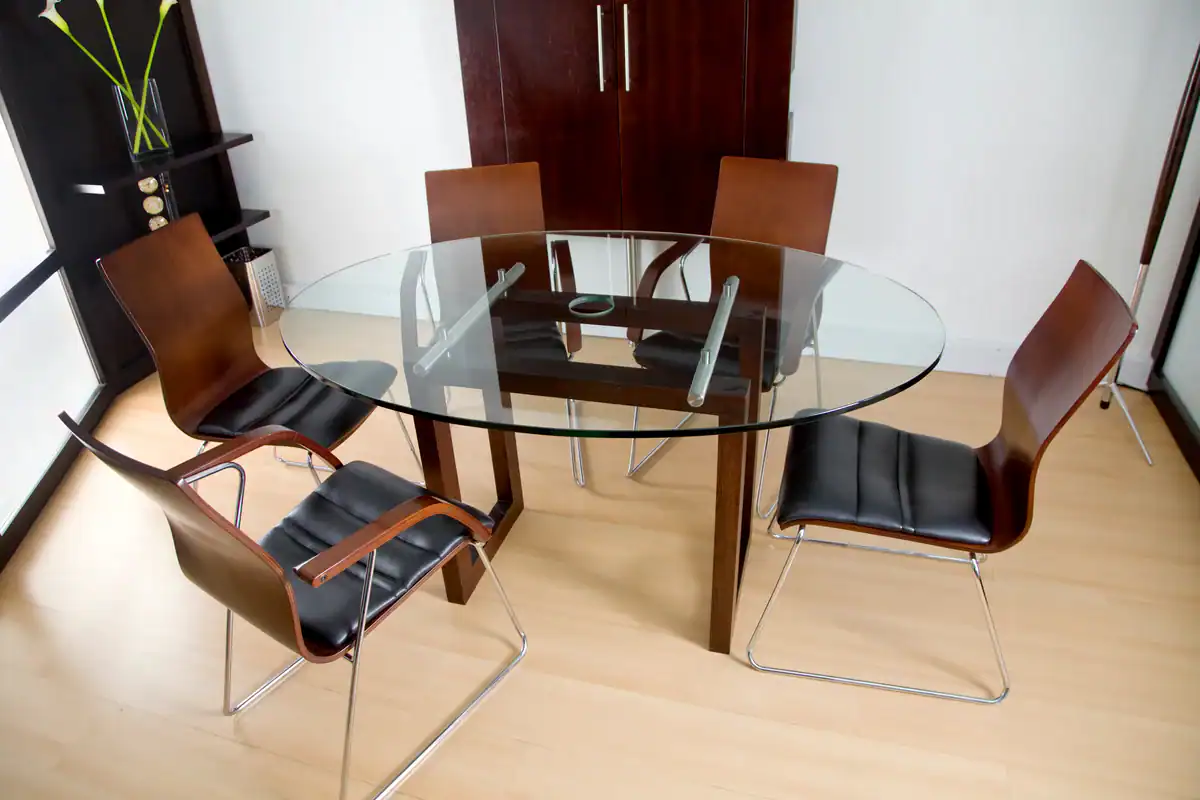
What thickness of glass do I need for my dining table in Amityville?
For most dining tables, 3/8 inch tempered glass is the standard recommendation. This thickness provides enough strength to support dishes, serving platters, and daily use without feeling fragile or bending under weight. It’s thick enough to be durable but not so heavy that it becomes difficult to handle or puts excessive stress on your table base.
If your dining table is particularly large—say, over six feet long—or if the glass will be the actual table surface sitting on a pedestal or minimal base rather than a protective cover, 1/2 inch thickness is a better choice. The extra thickness adds structural integrity for larger spans and gives you more confidence that the glass won’t flex or crack over time.
For smaller accent tables, breakfast nooks, or protective covers over existing dining surfaces, 1/4 inch can work fine. The key is matching thickness to how much weight the glass needs to support and whether it’s resting on a full table frame or spanning a larger unsupported area. During the measurement visit, we can assess your specific table and recommend the right thickness based on size, base design, and how you’ll be using it.
Is tempered glass really necessary, or can I save money with regular glass?
Tempered glass isn’t just a premium upgrade—it’s a safety requirement for table tops. Regular annealed glass is significantly weaker and breaks into large, sharp shards that can cause serious injuries. Tempered glass is heat-treated to be four to five times stronger and shatters into small, relatively harmless cubes if it does break.
For table tops specifically, you’re dealing with a surface that will have weight placed on it, items set down with force, and potential impacts from chairs, elbows, or objects being moved around. Tempered glass handles these stresses far better than regular glass. It’s also more resistant to thermal shock, which matters if you’re placing hot dishes on the surface or if the table sits near a window where sun exposure creates temperature changes.
The cost difference between regular and tempered glass is minimal compared to the risk you’re taking with standard glass. If regular glass breaks on your dining table during a family meal or while you’re working at your desk, you’re dealing with dangerous cleanup, potential injuries, and the cost of replacement anyway. Tempered glass is the standard for a reason—it’s what responsible glass fabricators use because it’s what actually keeps people safe. We use tempered glass for table tops as the default specification because it’s the right thing to do.
How do you secure glass table tops so they don't slide around?
The securing method depends on whether the glass is a protective cover over an existing table or the actual table surface on a base. For protective covers—like glass placed over a wood dining table or desk—clear rubber bumpers or adhesive pads are placed between the glass and the surface. These bumpers prevent the glass from sliding, allow air circulation to prevent moisture buildup, and absorb small impacts. They’re virtually invisible and don’t interfere with the clean look of the glass.
For standalone glass tops that sit on metal or wood bases, the approach varies based on the base design. Metal bases often use glass top adapters—aluminum disks that attach to the underside of the glass with clear epoxy and then bolt to the base. This creates a secure connection without visible hardware when you look down at the table. Wood bases might use silicone adhesive or rubber bumpers depending on the design and whether you want the glass to be removable.
The goal is always to keep the glass stable and level while accounting for the fact that wood and metal expand and contract with humidity and temperature changes. Long Island’s coastal climate means furniture materials move slightly throughout the year, so the securing method needs to be flexible enough to accommodate that movement without stressing the glass. During installation, we assess your specific base and use the method that provides the right balance of security and flexibility for your situation.
Can you cut glass for unusual table shapes or do custom edges?
Yes, custom shapes and edge work are standard capabilities for glass fabrication. Whether you have a round table, oval, rectangle with rounded corners, or an irregular vintage piece with unique dimensions, we can cut glass to match. The measurement process involves creating a template or taking precise dimensions of your table’s shape, including any curves, angles, or cutouts needed.
Edge finishing options include flat polished (smooth, modern 90-degree edge), pencil edge (rounded for safety and a softer look), and beveled edge (angled cut that adds elegance and catches light). The edge you choose depends partly on aesthetics and partly on function. Pencil edges are popular for round or oval tables and in homes with children because there are no sharp corners. Beveled edges work well on formal dining tables where you want a more upscale appearance. Flat polished is the most versatile and works with contemporary or traditional styles.
For tables that need holes—like patio tables with umbrella openings or desks with cable management pass-throughs—those can be incorporated during fabrication. The key is that all cutting, shaping, and edge work needs to happen before the glass is tempered. Once glass goes through the tempering process, it can’t be cut or drilled without shattering. That’s why accurate measurement and clear communication about what you need are critical at the start. We work with you to confirm every detail before fabrication begins so the finished piece matches your table exactly.
How long does it take to get a custom glass table top made and installed?
The timeline typically runs from initial measurement to installation within one to two weeks for standard projects, though this can vary based on complexity and current workload. The process breaks down into a few stages: measurement visit, proposal review, fabrication, and installation.
The measurement visit usually happens within a few days of your initial contact. Someone from our team comes to your location, takes measurements, discusses your needs, and provides information about thickness options and edge finishes. You’ll receive a detailed proposal shortly after that outlines specifications and pricing.
Once you approve the proposal, fabrication begins. The glass is cut to size, edges are finished, and the piece goes through the tempering process. Tempering requires the glass to be heated to over 1,000 degrees and then rapidly cooled, which takes time and can’t be rushed. For standard rectangular or round shapes with common edge finishes, this typically takes about a week. More complex shapes or custom edge work might add a few days.
Installation is usually scheduled once the glass is ready and typically takes under an hour for straightforward table tops. The installer brings the glass, secures it properly to your table or base, and makes sure everything is level and stable. For Amityville customers, the entire process from first contact to finished installation generally runs one to two weeks, assuming no unusual complications or custom requirements that need extra fabrication time. If you have a specific deadline—like you’re hosting an event or need the table ready by a certain date—mention that upfront so we can plan the schedule accordingly.
What's the cost difference between different glass thicknesses and edge finishes?
Thickness and edge finishing both affect cost, but the differences are usually more modest than people expect. Thicker glass costs more because it requires more material and is heavier to handle and transport. Moving from 1/4 inch to 3/8 inch, or from 3/8 inch to 1/2 inch, adds to the price, but you’re talking about incremental increases rather than doubling the cost. The bigger consideration is choosing the right thickness for your application so you don’t end up with glass that’s too thin and needs replacement.
Edge finishing also impacts price based on the labor involved. A basic seamed edge—where sharp edges are simply sanded smooth—is the most economical but isn’t suitable for table tops where edges are visible. Flat polished edges, which are ground and polished to a smooth, reflective finish, are the standard for most table tops and represent the baseline for pricing. Pencil edges, which are rounded, require additional grinding work and cost slightly more. Beveled edges, which involve cutting an angled slope into the edge, are the most labor-intensive and typically the most expensive option.
The real cost consideration isn’t trying to save money on thickness or edge finish—it’s making sure you get the right specifications for your table so you don’t waste money on glass that doesn’t perform as needed. A protective cover that’s too thin and cracks, or a standalone table top that flexes because it wasn’t thick enough, ends up costing more in replacement and frustration than just getting the appropriate thickness from the start. During the proposal stage, you’ll get clear pricing for the recommended specifications based on your table and use, along with options if you want to upgrade edge finish or thickness for aesthetic or durability reasons.
Other Services we provide in Amityville