
Glass Table Tops in East Farmingdale, NY
Protect What Matters Without Hiding It

Hear from Our Customers
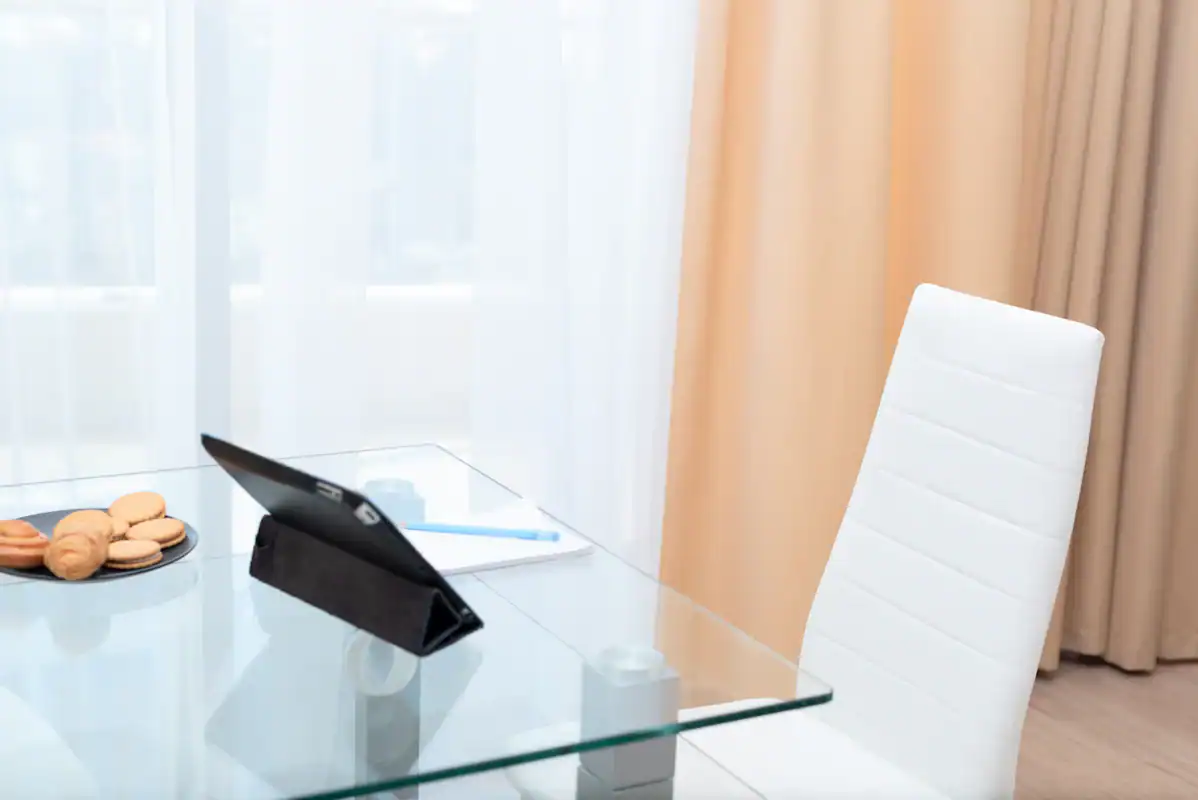
Custom Glass Table Tops Near You
You’re not looking for just any piece of glass. You need something cut to your exact measurements, thick enough to handle real use, and installed so it actually stays put.
That’s what custom glass table tops do when they’re done right. They protect your dining table from water rings and scratches. They let you see the wood grain on that antique piece your grandmother left you. They give your desk a clean, modern surface that wipes down in seconds.
Tempered glass means if something does go wrong, you’re not dealing with dangerous shards. Polished edges mean no one’s catching a sharp corner. And proper installation—whether that’s bumpers, adhesive, or adapters—means the glass isn’t sliding around every time someone leans on it.
You get furniture that lasts longer and looks better, without the constant worry about spills or scratches adding up.
Glass Services in East Farmingdale, NY
We’ve been serving East Farmingdale and the rest of Long Island for over 20 years. Custom glass solutions are what we do—shower doors, glass balconies, pool enclosures, and yes, table tops that actually fit.
We’re certified with the Better Business Bureau, active in the Long Island Builders Institute, and part of the National Kitchen and Bath Association. That’s not just paperwork—it’s accountability. We’ve worked in some of the finest homes in the Hamptons and with the top contractors across Suffolk County.
What sets us apart is the way we communicate. You get clear proposals, accurate measurements, and realistic timelines. No surprises, no runarounds. Just transparent service from people who’ve been doing this long enough to know what works and what doesn’t in Long Island homes.
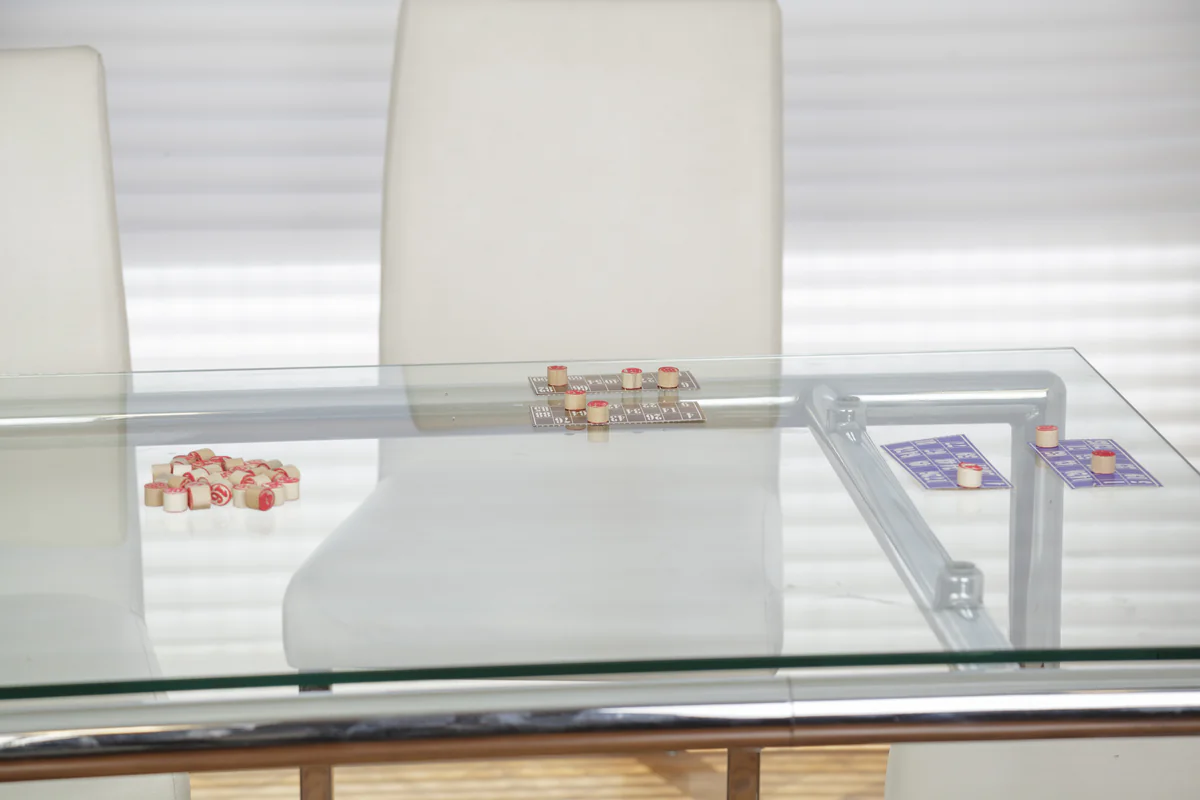
Glass Table Top Installation Process
It starts with a consultation. You describe what you need—maybe it’s a cover for your dining table, a replacement top, or protection for an antique piece. We’ll ask about the table base material, the size and shape you’re working with, and how you use the space.
Then comes the measurement. This isn’t a tape measure job you do yourself and hope for the best. A technician comes to your home in East Farmingdale, takes precise measurements, and discusses thickness options, edge styles, and how the glass will be secured. Wood bases usually work best with bumpers or adhesive. Metal bases might need adapters. We’ll explain what makes sense for your specific setup.
Once you approve the quote, fabrication begins. The glass is cut to your exact specs, edges are polished, and corners are eased for safety. Everything’s done to handle real use—not just look good in photos.
Installation is the final step. The glass is cleaned, positioned, and secured using the method that works for your table. You’ll see how it’s attached, how to maintain it, and what to expect long-term. Then you’re done. Your furniture is protected, your space looks sharper, and you can stop worrying about every spill.

Ready to get started?
Durable Glass Table Covers Available
Every glass table top from OMG Shower Doors is custom fabricated. That means you’re not choosing from a catalog of standard sizes and hoping one fits. You get glass cut to your exact dimensions—round, rectangular, oval, or a custom shape that matches your table perfectly.
Tempered glass is standard. It’s four times stronger than regular glass and shatters into small, blunt pieces if it ever breaks. That matters if you have kids, pets, or just want peace of mind. You’ll also choose your thickness—anywhere from 3/16″ up to 3/4″—based on how the table will be used and whether it needs to support weight directly.
Edge styles matter more than you’d think. Polished edges look clean and feel smooth. Beveled edges add a bit of detail. Corners are eased so no one catches a sharp point. It’s the kind of finish work that separates a professional job from something that just looks okay from a distance.
In East Farmingdale and across Long Island, homeowners are protecting everything from heirloom dining tables to modern desks to outdoor patio furniture. Glass works indoors and out, handles temperature changes, and wipes clean without staining or warping the way some finishes do. It’s a straightforward solution that actually holds up.
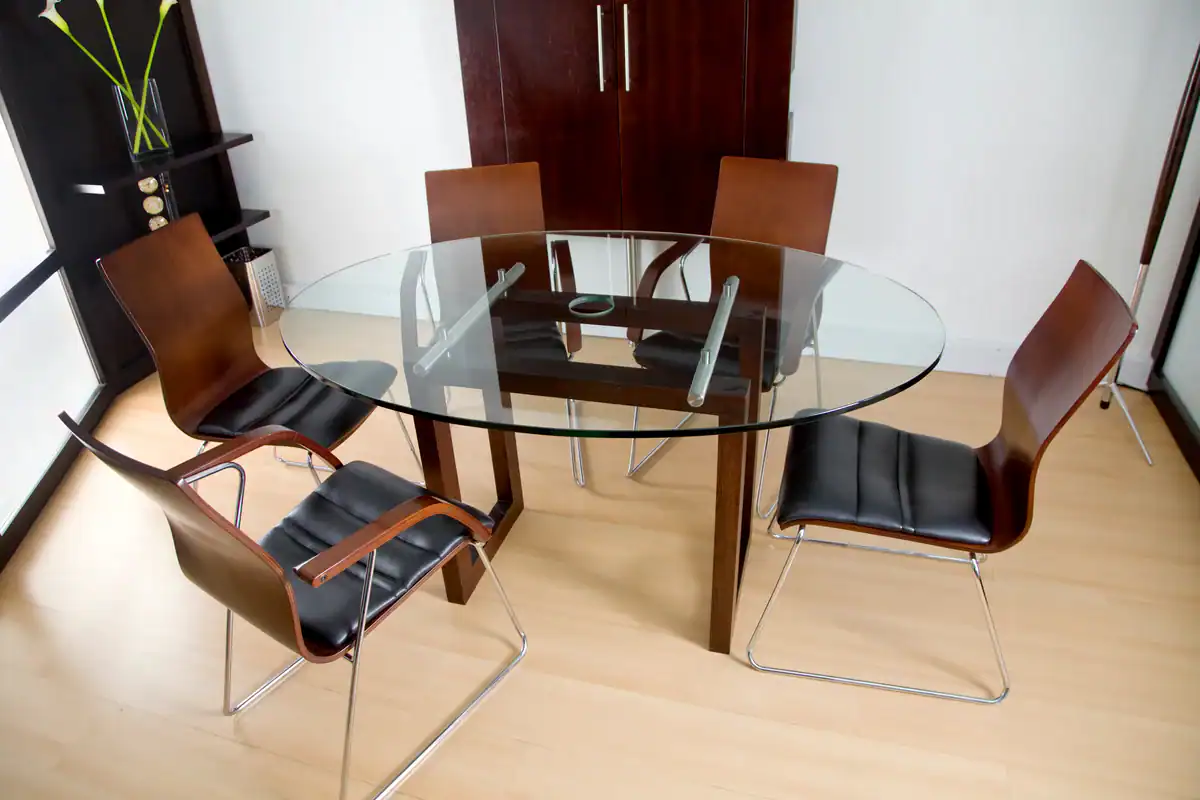
How thick should my glass table top be for everyday use?
It depends on how you’re using the table and what’s underneath. For a protective cover over an existing table surface—like a wood dining table or antique piece—1/4″ tempered glass is usually enough. It protects against scratches, spills, and heat without feeling too heavy or thick.
If the glass is the actual table surface and sits directly on a base or legs with no support underneath, you’ll want at least 1/2″ glass. Thicker glass like 3/4″ is better for large tables or surfaces that will hold heavy dishes, electronics, or other items regularly. The extra thickness adds stability and reduces flex.
Thicker glass also just feels more solid. If you’re investing in custom fabrication, going up in thickness often makes sense for long-term durability and peace of mind.
How do you keep the glass from sliding around on the table?
There are a few methods, and the right one depends on your table base material. For wood tables, clear rubber bumpers are the most common solution. They stick to the underside of the glass and the top of the table, creating friction that keeps everything in place. They’re nearly invisible, easy to apply, and don’t damage the wood.
For metal or steel bases, glass top adapters work better. These are aluminum disks that attach to the underside of the glass with epoxy, then bolt directly to the base. It’s a more permanent solution that creates a very stable connection. Some installations use silicone adhesive or double-sided mounting tape, especially if the glass needs to be removable later.
Professional installation makes a difference here. The glass and base both need to be perfectly clean, and the attachment points need to be centered and level. If it’s done wrong, the glass can still shift or feel unstable even with the right materials.
Can I use a glass table top outdoors on my patio furniture?
Yes, as long as it’s tempered glass. Tempered glass handles temperature changes much better than regular glass, which matters when your patio table is sitting in direct sun one day and cold rain the next. It won’t crack or shatter from thermal stress the way annealed glass might.
You’ll want to make sure the glass is secured properly, especially if your patio gets windy. Bumpers or adhesive work well for most outdoor tables. If the table base is metal, adapters give you the most secure attachment and prevent the glass from lifting or shifting in strong wind.
Maintenance is easy—tempered glass resists moisture and won’t warp, rot, or stain like some outdoor table materials. You’re just wiping it down occasionally to keep it clear. For Long Island weather, it holds up well year-round, though some people prefer to store glass tops during winter if they’re not using the patio furniture.
What's the difference between tempered and regular glass for table tops?
Tempered glass is heat-treated to make it much stronger—about four times stronger than regular annealed glass. That means it can handle more weight, resist impacts better, and hold up to daily use without cracking.
The bigger difference is what happens if it does break. Regular glass shatters into large, sharp shards that can cause serious injuries. Tempered glass breaks into small, blunt pieces that are far less dangerous. If you have kids, pets, or just want a safer option, tempered is the way to go.
There’s one trade-off: tempered glass can’t be cut or drilled after it’s been tempered. That’s why precise measurements matter so much before fabrication. Once the glass is tempered, the size and shape are final. But for table tops, that’s rarely an issue—you measure once, fabricate it right, and you’re set for years.
How do I clean and maintain a glass table top?
Glass is one of the easiest surfaces to maintain. For daily cleaning, a microfiber cloth and a standard glass cleaner work fine. Spray, wipe, done. If you want to avoid streaks, use a lint-free cloth or even just a damp microfiber towel followed by a dry one.
For tougher spots—dried food, sticky residue, fingerprints—a bit of white vinegar mixed with water works well. Avoid abrasive scrubbers or harsh chemicals that could scratch the surface or damage any coatings. Tempered glass is durable, but you don’t want to create fine scratches that build up over time.
If your glass is attached with bumpers or adhesive, check those attachment points every few months. Make sure they’re still secure and clean. Dust and grime can build up around the edges where the glass meets the table, so a quick wipe-down there keeps everything looking sharp. That’s really it—glass doesn’t need sealing, refinishing, or special treatments like wood does.
Can you make a glass table top for an antique or unusual shape?
Yes. Custom fabrication means you’re not limited to standard rectangles or circles. If you have an antique table with an oval top, a desk with rounded corners, or a unique shape that needs a protective cover, the glass can be cut to match.
The process involves taking precise measurements of the existing surface—not just length and width, but any curves, angles, or cutouts. For complex shapes, a template might be created to ensure the glass fits perfectly. That’s especially important for antiques where you want the glass to follow the contours without gaps.
You’ll also choose whether the glass sits on top of the surface or fits within a frame, and how much overhang (if any) you want. Edge styles and thickness can be customized too. The goal is to protect and enhance the piece without hiding what makes it special. It takes more planning than a standard table, but it’s absolutely doable with the right fabricator.
Other Services we provide in East Farmingdale