Glass Table Tops in Head Of The Harbor, NY
Protect What You've Invested In

Hear from Our Customers
Custom Glass Table Tops Head Of The Harbor
That dining table you refinished three years ago. The antique coffee table your grandmother left you. The custom desk you had built to fit the study. They’re all taking hits—water rings that won’t buff out, scratches from keys and laptops, heat marks from a mug you set down for two seconds.
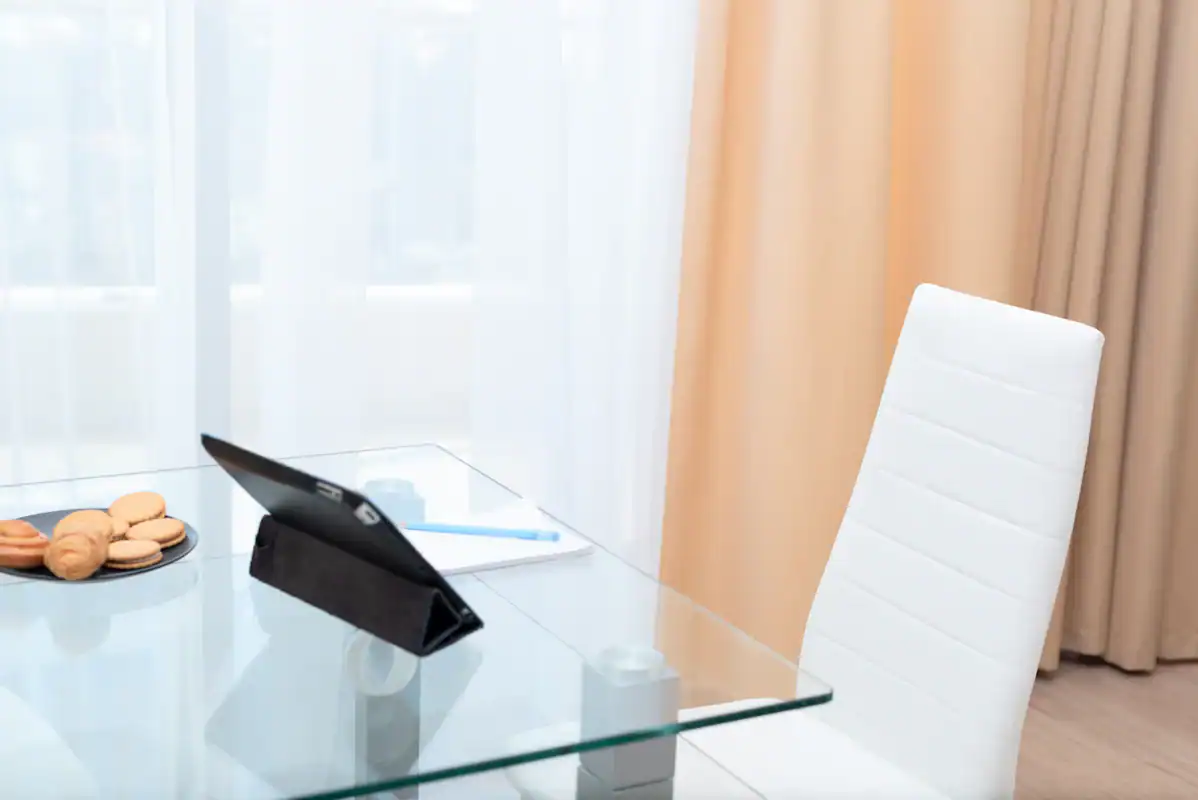
A custom glass table top stops the damage immediately. Not someday. Right now. It’s a clear, durable barrier between daily life and the surfaces you’ve spent real money on. You still see the wood grain, the finish, the details that made you choose that piece in the first place. But now nothing touches it directly.
The glass we fabricate isn’t off-the-shelf. It’s measured to your exact dimensions, cut precisely, and finished with polished edges that look intentional. Tempered for safety. Built to last. And because it’s custom, it actually fits—no gaps, no overhang, no “close enough.”
Glass Services Head Of The Harbor, NY
We’ve been fabricating custom glass solutions across Long Island for over 20 years. We’re the company contractors call when the project matters. We’re BBB certified, active members of LIBI and the National Kitchen and Bath Association, and we’ve worked in some of the finest homes from Head Of The Harbor to the Hamptons.
Glass table tops are part of what we do, but they’re not a side project. We approach them with the same precision we bring to frameless shower enclosures and glass railings. That means accurate measurements, transparent communication, and installation that doesn’t leave you second-guessing.
Head Of The Harbor homeowners know quality when they see it. Your homes reflect that standard, and so should the people you hire. We’ve built our reputation on showing up prepared, delivering what we promise, and making sure you’re satisfied before we consider the job done.
Glass Table Top Installation Process
First, we talk. You tell us about the table—what it’s made of, how you use it, what you’re trying to protect or improve. We ask about dimensions, edge preferences, and whether you’re thinking tempered glass or something lighter. This conversation matters because it determines everything that follows.
Next, we measure. If it’s a standard rectangle or circle, you can handle that part and send us the specs. If it’s an unusual shape, curved edges, or you just want to be certain, we come to you. We take the measurements ourselves, create a template if needed, and make sure we’re working with numbers that won’t leave you with a piece that’s a quarter-inch too wide.
Then we fabricate. Your glass is cut to size in our shop, edges are polished to your chosen finish—flat, beveled, pencil—and if you’ve opted for tempered glass (which we recommend), it goes through that process before it ships. We don’t rush this part. Precision here is what keeps you from dealing with chips, rough edges, or a top that doesn’t sit flush.
Finally, it’s delivered or installed. Depending on what you need, we either deliver it securely packaged with instructions for placement, or we install it ourselves with the right bumpers, pads, or adhesive to keep it stable. You’re not left figuring out how to make a 50-pound sheet of glass stay put on a pedestal base.

Ready to get started?
Durable Glass Table Covers Head Of The Harbor
Every custom glass table top we create starts with high-quality tempered glass—the kind that’s four times stronger than standard glass and shatters into dull pebbles instead of dangerous shards if something goes wrong. Thickness depends on how you’re using it. A protective cover over an existing wood surface? Quarter-inch works. A standalone table top with minimal support underneath? You’re looking at three-eighths or half-inch.
Edge work matters more than most people realize. A flat polished edge gives you a clean, modern look where the glass edge is visible. A beveled edge adds a slight angle and catches light differently. Pencil polish is rounded and smooth. We walk you through the options based on your table style and how the edges will be seen.
In Head Of The Harbor, we see a lot of requests for dining table glass, coffee table covers, and outdoor patio glass that can handle Long Island weather. The process is the same, but outdoor applications almost always get tempered glass and a slightly thicker spec. Sun, rain, and temperature swings are harder on glass than a climate-controlled dining room.
Shape and size are fully customizable. Round, square, rectangular, oval, racetrack—whatever matches your table base. We can add cutouts for umbrella poles, radius corners for safety, or notches to fit around table supports. If your furniture isn’t standard, your glass doesn’t have to be either.
What thickness of glass table top do I actually need for my table?
It depends on what’s underneath and how much weight the glass will carry. If you’re placing glass over an existing solid table top as a protective cover—say, to guard a wood dining table from scratches and water rings—a quarter-inch thickness is usually enough. The table itself is doing the structural work. The glass is just a shield.
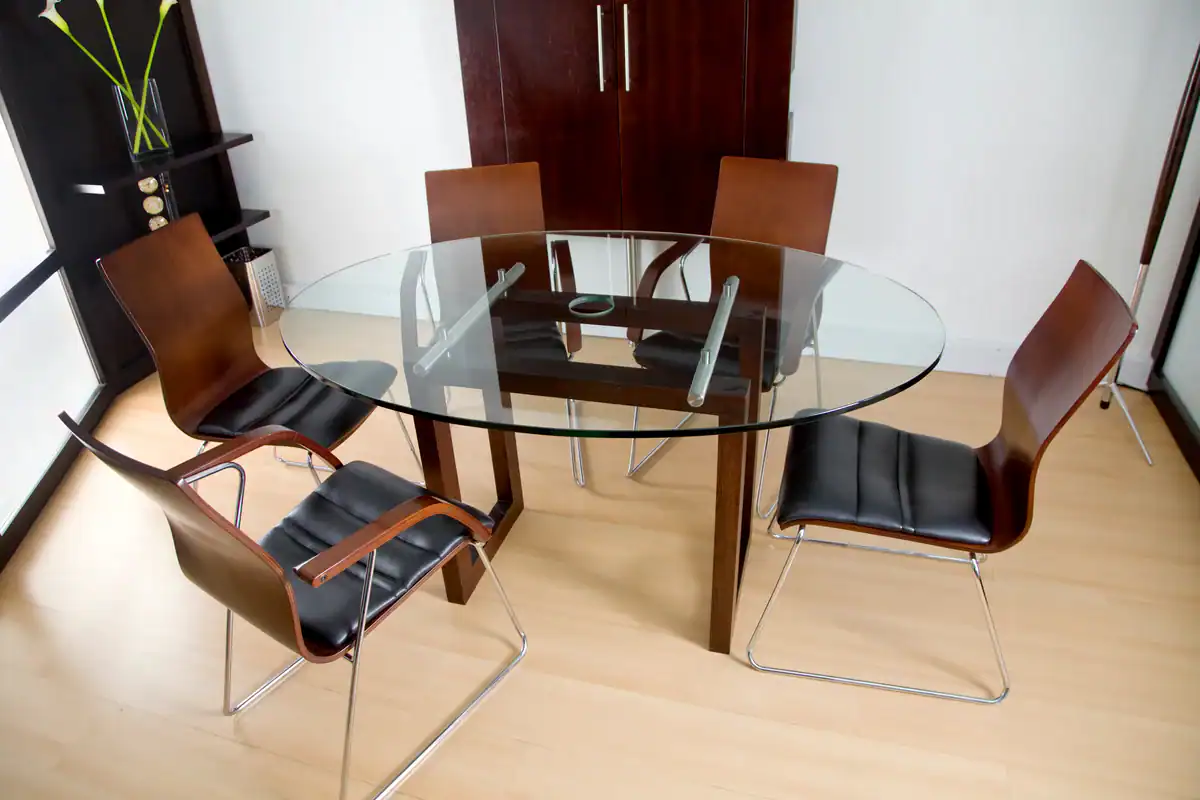
If the glass is going to be the table surface—meaning it’s resting on a frame or pedestal base with no solid support underneath—you need thicker glass. For most dining tables and desks in that category, three-eighths inch is the standard. It’s strong enough to handle plates, laptops, and daily use without flexing. For larger tables over 48 inches, or tables that will hold heavier objects, half-inch glass is the better call.
Outdoor patio tables get the thicker treatment too. Temperature changes, sun exposure, and the occasional impact from moving furniture around mean you want glass that can take it. We typically recommend three-eighths or half-inch tempered glass for anything going outside. Tempered glass is stronger and safer, and for outdoor use, it’s non-negotiable.
How do I measure my table correctly so the glass actually fits?
Measuring sounds simple until you’re standing there with a tape measure wondering if you’re supposed to include the lip, the frame, or just the flat part. Here’s the straightforward version: you’re measuring the flat surface area where the glass will sit. Not the decorative edge. Not the overhang. The actual flat part.
For rectangular or square tables, measure the width and length at the widest points. Measure twice, in two different spots, because tables aren’t always perfectly uniform. Write it down in inches and fractions—down to the nearest sixteenth if you can. It’s better to be a sixteenth too small than an eighth too big.
For round tables, measure straight across the center to get the diameter. For oval or irregular shapes, you might need to create a template using cardboard or paper, tracing the outline so we can replicate it exactly. If your table has radius corners (rounded edges), check if a dime, nickel, or quarter matches the curve. If it does, that tells us the radius size. If it doesn’t, we’ll need a template of that corner.
If any of this feels uncertain, we can come measure it ourselves. One site visit saves you from ordering a piece that doesn’t fit, and it gives us a chance to see the table in person so we’re recommending the right thickness and edge style for what you’re working with.
Is tempered glass really necessary or is that just an upsell?
Tempered glass costs more, so it’s fair to ask if it’s actually worth it. Short answer: yes, especially if the glass is going to be used as a table surface or in a high-traffic area. Tempered glass is heat-treated to be about four times stronger than regular annealed glass. It resists impact better, handles temperature changes without cracking, and if it does break, it shatters into small, blunt pieces instead of large, sharp shards.
That last part is the safety factor. If you have kids, pets, or just a busy household where things get knocked over, tempered glass means a broken table top is an inconvenience, not a trip to the emergency room. Regular glass breaks into jagged pieces that can cause serious cuts. Tempered glass breaks into pebbles. It’s still a mess, but it’s a much safer mess.
For a protective cover over a solid table where the glass isn’t load-bearing, you could technically use annealed glass and save some money. But most people go with tempered anyway because the peace of mind is worth the extra cost. For anything outdoors, anything unsupported, or anything in a home with children, tempered glass isn’t optional—it’s the only smart choice.
Can you make glass table tops for outdoor patio furniture?
Yes, and we do it regularly for clients across Long Island. Outdoor glass table tops take more of a beating than indoor ones, so the specs are different. You’re dealing with sun exposure, rain, humidity, temperature swings from summer heat to winter cold, and the occasional impact from patio furniture being moved or knocked around.
We always use tempered glass for outdoor applications. It’s stronger, more resistant to thermal shock, and safer if it breaks. Thickness is usually three-eighths or half-inch depending on the table size and how much support the base provides. If it’s a large patio table with a pedestal base, we’re going thicker. If it’s a smaller side table with a solid frame, three-eighths works.
Edge finishing matters outdoors too. Flat or pencil polished edges are the most common because they’re smooth and safe to the touch. If your patio table has an umbrella, we can cut a hole for the pole—sized exactly so it fits snugly without leaving gaps. We can also add radius corners to reduce sharp edges and make the table safer around kids.
One thing to keep in mind: even though tempered glass is durable, it’s still glass. If you’re in an area with harsh winters, some people choose to remove the glass top and store it during the off-season. It’s not required, but it extends the life of the glass and prevents any potential damage from ice, snow, or debris.
What's the difference between the edge finishes and which one should I choose?
Edge finishes determine how the glass looks and feels where it meets the table or where it’s exposed. There are a few standard options, and which one you choose depends on the style of your table and whether the edges will be visible.
A flat polished edge is exactly what it sounds like—the edge is ground flat and polished smooth. It has a clean, modern look and works well when the glass sits on top of a table and the edges are fully visible. It’s the most common choice for dining tables and coffee tables where you want a minimalist, sharp appearance.
A beveled edge has an angled cut along the perimeter, usually at 45 degrees, which catches light and adds a decorative touch. It’s slightly more formal and works well on traditional or upscale furniture. Beveled edges make the glass look more substantial and finished, but they add to the cost.
A pencil polished edge is rounded and smooth, almost like the edge of a pencil (hence the name). It’s softer to the touch and a bit safer if you have kids who might brush up against the table. It’s less formal than a bevel but more refined than a flat polish.
If the glass is going inside a frame or the edges won’t be visible at all, a seamed edge is fine. It’s lightly sanded to remove sharpness but not polished. It’s the most affordable option and perfectly functional when appearance isn’t a factor. For most residential table tops where the glass is on display, you’ll want flat polish or beveled.
How long does it take to get a custom glass table top made and installed?
Timelines depend on the complexity of the project and our current workload, but here’s the general range. For a straightforward custom glass table top—standard shape, clear tempered glass, polished edges—you’re usually looking at one to two weeks from the time we finalize measurements to delivery or installation. That includes fabrication time and, if applicable, the tempering process.
If your table has an unusual shape, requires a site visit for templating, or involves custom cutouts or special edge work, it might take closer to three weeks. We don’t rush the fabrication because precision is what makes the piece fit correctly and look right. A few extra days on the front end save you from dealing with a top that doesn’t sit flush or has rough edges.
Once the glass is ready, installation (if we’re handling it) usually takes an hour or less. We’ll place the glass, add the appropriate bumpers or adhesive pads to keep it stable, and make sure everything is level and secure. If you’re picking it up or we’re delivering it for you to install, we’ll package it carefully and provide guidance on placement and securing methods.
If you’re working on a specific timeline—say, you’re hosting an event or finishing a renovation—let us know upfront. We’ll do our best to accommodate tighter deadlines when possible, but realistic expectations help everyone. Quality takes time, and a table top that fits perfectly is worth the wait.
Other Services we provide in Head Of The Harbor