
Glass Table Tops in Herricks, NY
Protect Your Furniture Without Hiding It

Hear from Our Customers
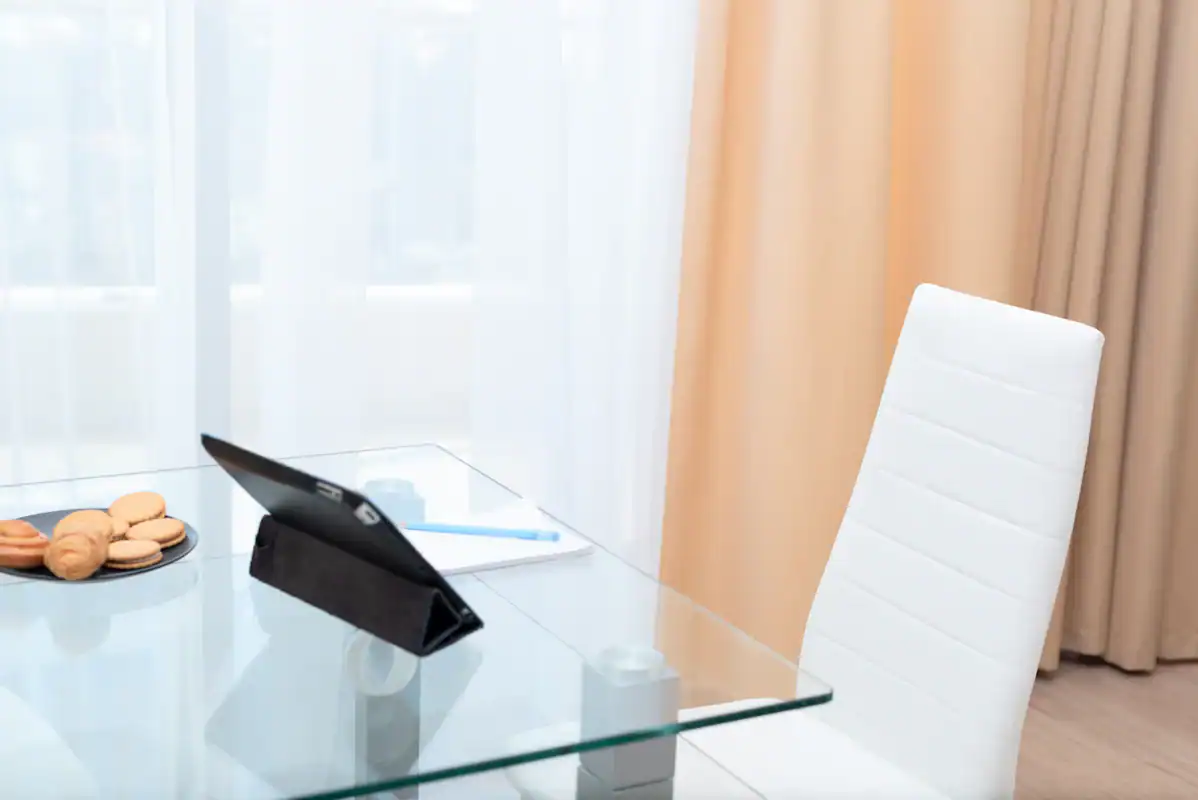
Custom Glass Table Tops Herricks
Your dining table doesn’t need refinishing. It needs protection from what’s already happening—scratches from homework, water rings from glasses, heat marks from serving dishes. A custom glass table top stops that damage before it starts.
You get a surface that’s easy to wipe clean, resistant to heat and spills, and completely transparent so the wood grain or finish underneath stays visible. It’s not decorative. It’s functional protection that happens to look clean and modern.
This works for dining tables, coffee tables, desks, dressers, nightstands, even outdoor patio furniture. The glass is cut to your exact measurements, so it fits the table you already own—no gaps, no overhangs, no compromises. Just a surface that protects what you’ve invested in and keeps it looking the way it should.
Glass Services Herricks NY
We’ve served Long Island for over two decades. We fabricate and install custom glass for high-end homes across the region, including the Hamptons, and we bring that same level of precision to every glass table top project in Herricks.
We’re certified by the Better Business Bureau and hold active memberships in the Long Island Builders Institute and the National Kitchen and Bath Association. Our work is trusted by top contractors and homeowners who expect accuracy, clarity, and results that last.
Herricks homeowners understand the value of quality work. With property values averaging near $800,000 and a homeownership rate above 96%, this is a community that invests in what matters. We match that standard with transparent communication, exact measurements, and glass that’s built to protect your furniture for years.
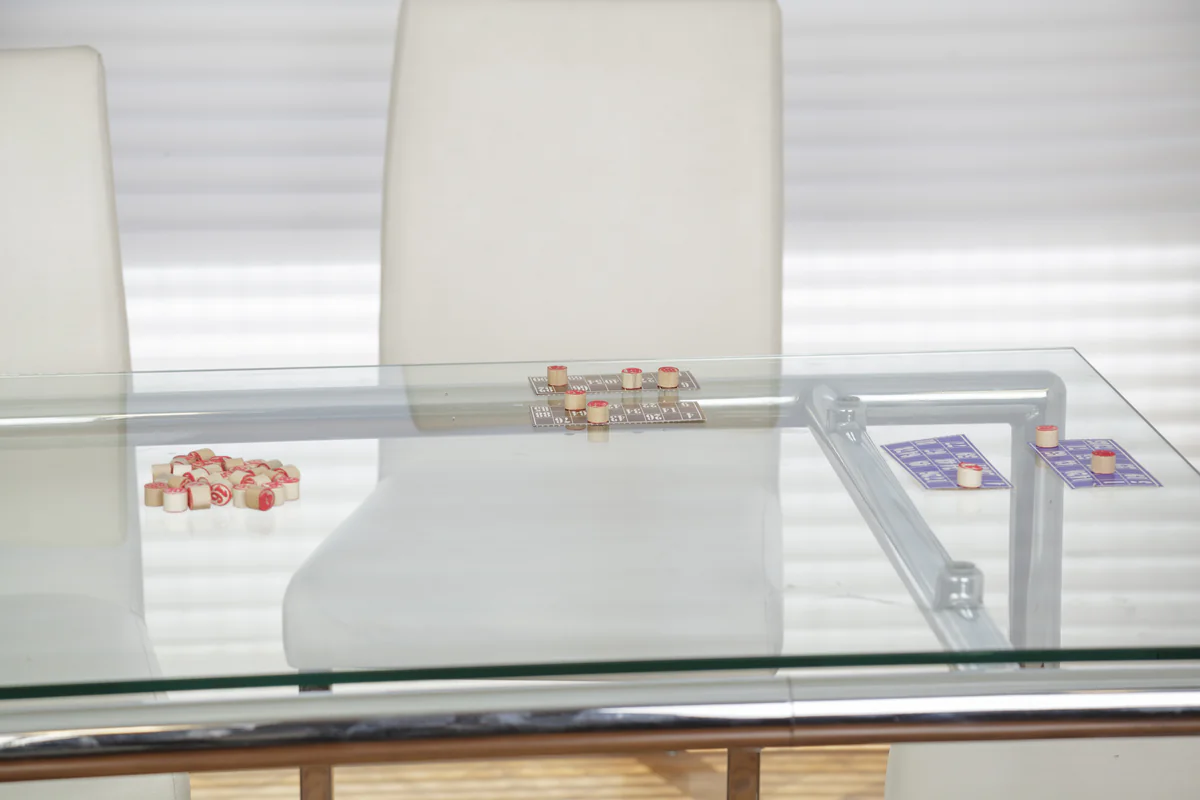
Custom Glass Table Tops Process
We start with a consultation to understand what you’re protecting and how you use the table. Dining tables take more abuse than nightstands. Outdoor patio furniture needs tempered glass. We ask the right questions so you get the right product.
Next, we take precise measurements at your location. We’re not guessing or relying on dimensions you provide over the phone. We measure the table ourselves to account for shape, corners, and any irregularities that affect fit.
Once we have your specs, we fabricate the glass to your exact dimensions. You choose the thickness based on the table size and how it’s supported—1/4″ for smaller tables or protective covers, 3/8″ for standard dining tables, 1/2″ or thicker for large or unsupported surfaces. You also choose the edge finish: flat polished for a clean look, beveled for elegance, or pencil edge for rounded safety.
We use tempered glass for most table tops. It’s four times stronger than regular glass and shatters into small, harmless pieces if it ever breaks. That’s especially important if you have kids or use the table daily.
After fabrication, we deliver and install the glass, making sure it sits securely on your table with the right pads or spacers to prevent scratching and movement. You’re left with a surface that protects your furniture and requires nothing more than a quick wipe with glass cleaner to stay spotless.

Ready to get started?
Durable Glass Table Covers Herricks
You’re getting custom-cut tempered glass fabricated to fit your specific table. That means we measure your furniture, cut the glass to match, polish the edges, and deliver a finished product ready to install.
The glass itself is available in multiple thicknesses depending on your table size and how you use it. A 1/4″ thickness works well for coffee tables or as a protective cover over existing surfaces. For dining tables that see daily use, 3/8″ is standard. Larger tables or those with pedestal bases may need 1/2″ or thicker for proper support and durability.
In Herricks, where homes average nearly $800,000 and residents invest in quality furnishings, protecting those pieces makes sense. A custom glass top preserves expensive wood tables, antique furniture, or marble surfaces without hiding them. You still see the grain, the finish, the craftsmanship—you just don’t see the scratches and water rings that come with daily use.
Edge finishes matter too. A flat polished edge is clean and minimalist. A beveled edge catches light and adds a formal touch. A pencil edge is rounded and safer for homes with young children. We walk you through these options so you get the look and function that fits your space.
Tempered glass is heat-resistant, scratch-resistant, and easy to maintain. Spills wipe away with a damp cloth. There’s no refinishing, no special cleaners, no upkeep beyond basic cleaning. It’s a one-time investment that protects your furniture for years and saves you the cost and hassle of refinishing or replacing damaged tables down the line.
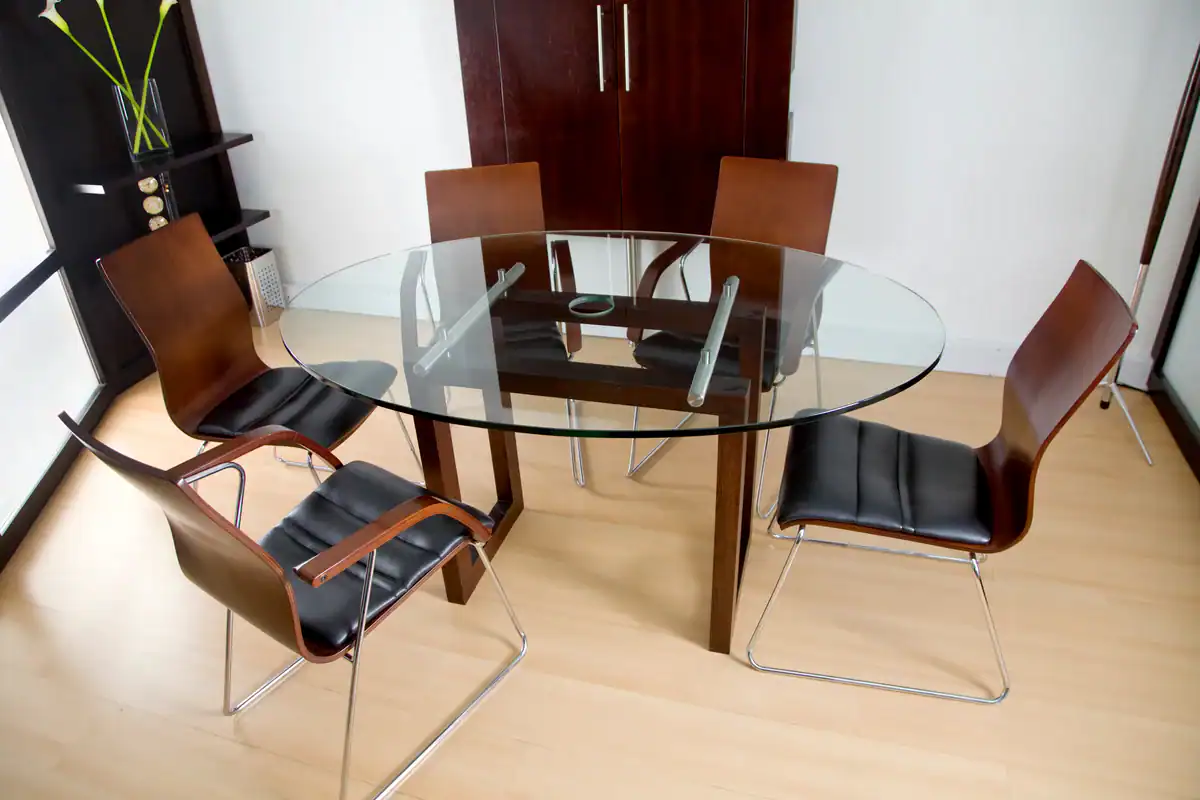
What thickness of glass do I need for my dining table?
For most dining tables, 3/8″ tempered glass is the standard recommendation. It’s thick enough to handle daily use—plates, serving dishes, people leaning on the table—without feeling flimsy or flexing under weight.
If your table is larger than 48 inches or seats more than four people, you may want to go with 1/2″ thickness for added strength and stability. This is especially true if the table has a pedestal base or minimal support structure underneath.
For smaller accent tables, side tables, or nightstands, 1/4″ glass works fine since those surfaces don’t bear heavy weight. If you’re using the glass as a protective cover over an existing tabletop (rather than as the primary surface), 1/4″ is usually sufficient. The key is matching the thickness to how the table is used and supported.
Should I use tempered glass or regular glass for my table top?
Tempered glass is the better choice for almost every table top application. It’s heat-treated to be four times stronger than regular annealed glass, which means it resists impacts, handles daily wear better, and is far less likely to break under normal use.
The safety factor matters too. If tempered glass does break, it shatters into small, blunt pieces instead of large, sharp shards. This is especially important for dining tables, coffee tables, or any surface in a home with children or pets.
Regular annealed glass is cheaper, but it breaks into dangerous fragments and isn’t recommended for surfaces that see frequent use or bear weight. Tempered glass costs slightly more upfront, but the added durability and safety make it the smarter long-term investment for furniture protection.
How do I keep the glass from sliding or scratching my table?
We install the glass with non-slip pads, bumpers, or spacers at each corner or along the edges. These small accessories create a buffer between the glass and your table surface, preventing scratches and stopping the glass from sliding when you set things down.
For wood tables, silicone or felt spacers work best because they’re soft, protect the finish, and allow air circulation to prevent moisture buildup. If you want an invisible solution, clear rubber dots or adhesive discs hold the glass in place without affecting the look.
The spacers also reduce vibration and noise when you place objects on the glass. They’re a simple addition that makes a noticeable difference in how stable and secure the table top feels during everyday use. We include the right hardware as part of the installation so you don’t have to worry about it.
Can I get a glass top for an antique or irregularly shaped table?
Yes. That’s exactly what custom fabrication is for. We measure your table in person to account for its exact shape, size, and any irregularities like curves, notches, or uneven edges.
Off-the-shelf glass won’t fit unique or antique furniture properly. You end up with gaps, overhangs, or corners that don’t align. Custom-cut glass solves that problem by matching your table’s dimensions precisely, whether it’s round, oval, rectangular, or an irregular shape.
We also work with you on edge finishes and thickness to make sure the glass complements the style of the furniture. An antique wood table might look best with a beveled edge for a formal touch, while a modern desk might call for a flat polished edge. The goal is a finished product that fits perfectly and looks like it belongs.
How do I clean and maintain a glass table top?
Glass table tops are one of the easiest surfaces to maintain. A quick wipe with glass cleaner and a microfiber cloth is all it takes to keep them spotless. Avoid paper towels, which can leave lint and cause fine scratches over time.
For daily cleaning, you can use a damp cloth to wipe away spills, crumbs, or fingerprints. For a streak-free shine, spray the cleaner on the cloth instead of directly on the glass, then wipe in circular motions and buff dry with a clean microfiber towel.
Tempered glass is scratch-resistant, but it’s not scratch-proof. Use coasters under glasses, placemats under dishes, and avoid dragging heavy or rough objects across the surface. With basic care, your glass top will stay clear and pristine for years without any special treatments or maintenance routines.
What's the difference between a glass table top and a glass table cover?
A glass table top is the primary surface of the table—it’s the actual tabletop, usually sitting on a base or frame. It needs to be thick enough to support weight on its own, typically 3/8″ or thicker depending on the size and support structure.
A glass table cover, on the other hand, is a protective layer placed over an existing table surface. It’s thinner—usually 1/4″—because it’s not bearing weight independently. It’s there to protect the wood, marble, or finish underneath from scratches, spills, and heat damage while still showing the table’s original appearance.
Both are custom-cut to fit your furniture, but the thickness and purpose differ. If you’re protecting an expensive dining table you already own, a glass cover makes sense. If you’re building or replacing a table and need the glass to function as the surface itself, you need a thicker glass table top.
Other Services we provide in Herricks