Summary:
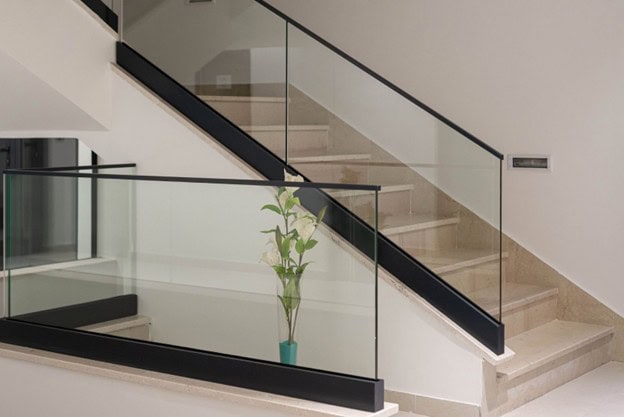
Interior Staircase Glass Railing
Your interior staircase sets the tone the moment someone walks through the door. Traditional wood or metal balusters create visual barriers that chop up the space and block natural light. Glass changes that completely.
A glass stair railing keeps sightlines open from your entryway all the way through to the back of your home. Light moves freely between floors instead of getting trapped by solid rails. The effect makes your interior feel larger, brighter, and more connected.
This works especially well in Long Island homes with open floor plans or two-story entryways. When you’ve invested in high ceilings and architectural details, glass lets you actually see them instead of cutting them off halfway up the stairs.
Floating Stairs and Open Riser Designs with Glass
Floating stairs—where treads appear to hover without visible support—pair naturally with glass railings. The combination creates a sculptural centerpiece that feels light and modern without sacrificing safety.
Frameless glass railing systems use minimal hardware, often just standoff pins or base channels that stay out of view. This keeps the focus on the stairs themselves. You get the safety barrier you need without adding visual weight.
Open riser stairs (where you can see through between the treads) benefit even more. Glass continues that sense of transparency from the treads to the railing, making the entire staircase feel like it takes up less space than it actually does.
Installation here requires precision. The glass panels need to align perfectly with the stair angle, and the hardware has to anchor securely into the structure. Tempered glass—typically half-inch thick for residential applications—provides the strength to handle the lateral pressure when someone leans against it.
If you’re working with a curved staircase, glass can still work, but the panels need to be custom-cut to follow the curve. That adds complexity and cost, but the result is worth it when you want that seamless, uninterrupted look.
One thing to consider: glass shows fingerprints and smudges more than painted wood or metal. If you have young kids who touch everything, you’ll be cleaning more often. It’s not difficult—just a reality of the material.
Glass Handrails for Interior Balconies and Loft Spaces
Interior balconies and loft spaces overlook the main living area, and that’s exactly where glass railings shine. You preserve the view from both levels—looking down from the balcony and looking up from below.
A frameless glass balustrade with a slim glass handrail (or minimal top rail, depending on local code) keeps the barrier nearly invisible. This works beautifully in homes with vaulted ceilings, great rooms, or mezzanine levels where you want to maintain that sense of openness.
The glass also acts as a sound barrier without feeling like a wall. Conversations and noise travel differently when there’s a solid surface, but because glass is transparent, it doesn’t feel like you’re closing off the space.
For Nassau County and Suffolk County homes, building codes dictate specific height and strength requirements for balcony railings. Glass systems need to meet those standards, which is why tempered or laminated glass is required. Tempered glass shatters into small, relatively harmless pieces if it breaks. Laminated glass has a vinyl layer that holds the glass together even when cracked.
Hardware choices matter here. Stainless steel posts and brackets resist corrosion, which is important in Long Island’s coastal climate. Even interior installations benefit from corrosion-resistant materials because humidity and salt air can travel indoors.
You can choose between top-mounted systems (where the glass sits on the floor surface) or fascia-mounted systems (where the glass attaches to the side of the balcony edge). Top-mounted tends to look cleaner and more modern. Fascia-mounted saves floor space and works well when the balcony edge is already finished.
Maintenance is straightforward. Wipe the glass with a mild cleaner and a soft cloth every few weeks. Avoid abrasive cleaners that can scratch the surface or damage the hardware finish.
Exterior Glass Railing for Decks and Balconies
Exterior applications are where glass railings really prove their value. If you’ve got a view—ocean, bay, landscape, or even just a well-designed backyard—traditional railings block it. Glass doesn’t.
An exterior glass railing system frames the view instead of interrupting it. You get the safety barrier required by code without losing what you paid for when you chose that property.
Decks and balconies in Nassau County and Suffolk County face specific challenges: salt air, temperature swings, freeze-thaw cycles, and occasional high winds. The glass itself handles this well, but the hardware needs to be spec’d correctly. Stainless steel or powder-coated aluminum holds up better than standard metals that rust or corrode.

Glass Deck Railing Systems for Waterfront Properties
Waterfront properties along Long Island’s coast are prime candidates for glass deck railings. When you’re paying a premium for water views, the last thing you want is a railing that cuts them in half.
Frameless glass railing systems use either a base shoe channel (a slim aluminum track at the bottom) or standoff brackets that attach to the side of the deck. Both options keep the glass panels secure while minimizing visible hardware.
The base shoe system is popular because it creates that floating glass effect. The channel sits flush with the deck surface, and the glass panels slide into place. A top cap rail (optional, depending on code) can be added for extra stability and to meet handrail requirements.
Standoff systems use circular stainless steel fittings that anchor each panel directly to the deck structure. This works well when you want to keep the deck surface clear or when the deck edge doesn’t allow for a base channel.
Wind load is a real consideration for waterfront decks. Glass panels need to be thick enough and anchored securely enough to handle sustained wind pressure. Half-inch tempered glass is standard, but some installations use thicker panels or laminated glass for added strength.
Drainage matters too. If water pools around the base of the glass, it can lead to staining or algae growth. Properly installed systems include weep holes or drainage channels to prevent this.
Cleaning exterior glass railings takes a bit more effort than interior ones, especially near the water. Salt spray leaves residue that needs to be rinsed off regularly. A weekly rinse with fresh water and a monthly cleaning with a mild glass cleaner keeps them looking clear.
The payoff is worth it. Glass deck railings consistently rank as one of the top desired features in Long Island real estate. Buyers notice them, and they photograph well in listings.
Pool Area Glass Railing and Safety Barriers
Pool areas require safety barriers by code, but that doesn’t mean they have to look like fences. Glass pool railings provide the required enclosure while keeping sightlines open so you can supervise swimmers from anywhere in the yard.
Frameless glass balustrades work particularly well around pools because they don’t create hiding spots or visual obstructions. Parents can see the entire pool area at a glance. The glass also blocks wind, which makes the pool area more comfortable on breezy Long Island days.
Pool codes are strict. The railing height, gate requirements, latch placement, and panel spacing all have specific rules designed to prevent accidents. A professional installer who knows local Nassau County and Suffolk County codes will make sure everything meets requirements.
Tempered glass is required for pool applications because of the safety factor. If a panel does break, it shatters into small granules instead of large, sharp shards. Laminated glass adds another layer of protection—the vinyl interlayer holds the glass together even if it cracks.
Hardware for pool railings needs to be marine-grade stainless steel or heavily powder-coated to resist constant moisture and chemical exposure from pool water. Standard finishes will corrode quickly in this environment.
Gates are a key component. Pool gates need to be self-closing and self-latching, with the latch positioned high enough that young children can’t reach it. Glass gates can be designed to match the railing system, creating a seamless look while meeting all safety requirements.
Maintenance around pools is more intensive. Chlorine, saltwater (if you have a salt system), and pool chemicals can leave deposits on the glass. Regular rinsing and cleaning prevent buildup. Some homeowners apply a protective coating to the glass that makes water bead off and reduces spotting.
The visual benefit is significant. A glass pool enclosure feels more like an extension of your outdoor living space rather than a fenced-off area. It integrates with the landscape instead of cutting through it.
Choosing the Right Glass Railing for Your Space
Glass railings work in more places than most people realize. Interior staircases, balconies, loft spaces, exterior decks, and pool areas all benefit from the clean sightlines and modern aesthetic that glass provides.
The key is matching the right system to each location. Frameless glass balustrades maximize the view. Base shoe systems create that floating effect. Standoff brackets keep deck surfaces clear. Each approach solves a specific problem while delivering the look you want.
Installation quality matters as much as the materials. Properly anchored glass, corrosion-resistant hardware, and code-compliant design ensure your railing performs well for decades. If you’re considering glass railings for your Nassau County or Suffolk County home, we bring over 20 years of custom glass expertise, transparent communication, and meticulous attention to detail to every installation.