Summary:
You’ve been putting off that bathroom project for months. Maybe years. The tile’s outdated, the layout doesn’t make sense anymore, or you’re just tired of fighting with a space that doesn’t work. But when you start looking into options, the terminology gets confusing fast. Custom remodel. Standard renovation. Complete overhaul. Cosmetic refresh. What’s the actual difference, and which one do you need?
Here’s what matters: the approach you choose determines your budget, your timeline, and whether the finished bathroom actually solves the problems you’re dealing with now. Let’s clear up the confusion.
Complete Bathroom Remodel: Full Renovation Approach
A complete bathroom remodel means you’re changing how the space functions, not just how it looks. This is the path when your current layout doesn’t work, when you need to relocate fixtures, or when you’re dealing with outdated plumbing and electrical systems that need replacement anyway.
In Nassau County, a complete renovation typically runs between $15,000 and $40,000 for mid-range projects, with timelines stretching four to six weeks from demolition to final inspection. The higher costs reflect local labor rates that run 15 to 25 percent above national averages, plus the reality of working with older home construction that often reveals surprises once walls come down.

What a Complete Bathroom Renovation Actually Includes
When contractors talk about a complete bathroom renovation, they mean gutting the space down to studs and subfloor, then rebuilding with updated systems and new finishes. This includes removing old fixtures, tiles, and sometimes walls. Plumbing and electrical systems get updated to current code. The layout gets framed, followed by new plumbing, wiring, and proper ventilation installation.
Walls are closed with drywall, then painted or tiled. Flooring goes down. New fixtures like the tub, toilet, vanity, and lighting get installed. In Nassau County specifically, this process requires permits for any work involving plumbing, electrical, or structural changes. Skipping permits creates problems down the road with insurance, resale, and potential fines.
The timeline matters because you’re likely dealing with your only bathroom or your primary bathroom. Most Nassau County projects take four to six weeks, though supply chain delays for custom elements like specialty tile or specific fixtures can add another two to four weeks. Plan accordingly if you’re working around a specific deadline like preparing a home for spring or fall selling seasons.
The investment makes sense when your current bathroom layout is inefficient, when you’re dealing with accessibility concerns that require structural modifications, when plumbing or electrical systems are outdated and need replacement anyway, or when you’re planning to stay in the home long enough to enjoy the improvements. The return on investment typically hits around 60 percent, meaning a bathroom remodel costing roughly $15,000 could add about $9,000 to your home’s value in the Nassau County market.
How Complete Renovations Handle Nassau County Building Requirements
Nassau County has specific building requirements that affect how complete bathroom renovations get executed. Proper ventilation isn’t optional here because coastal humidity creates moisture challenges that can destroy property value and create health hazards. Your contractor needs to understand requirements like grab bar placement heights, ventilation fan specifications based on square footage, and accessibility compliance standards.
Getting these details right the first time prevents expensive corrections later. A knowledgeable contractor who understands Nassau County’s specific requirements saves you headaches by managing permit acquisition, ensuring code compliance, and maintaining relationships with local inspectors. They know when to call ahead and how inspections actually work in your specific town.
The permit process covers plumbing work, electrical updates, structural changes, and ventilation requirements. Working without proper permits results in fines, legal complications, and serious problems when you try to sell the home. The bureaucracy exists to ensure your renovation meets safety standards, not to make your life difficult.
Water damage, outdated plumbing, and poor ventilation only worsen with time. Delaying necessary repairs decreases your home’s value while the problems compound. Better to address issues now with a complete renovation than patch problems that will resurface within a few years.
Custom Bathroom Remodel Options for Luxury Homes
Custom bathroom remodels go beyond standard renovations by emphasizing personalization, design detail, and long-term lifestyle enhancement. This approach makes sense for homeowners who want more than efficient upgrades. You’re investing in a space that reflects your specific taste, accommodates your exact routine, and includes features that matter to you personally.
In Nassau County’s luxury market, including areas like the Hamptons, Old Westbury, and Sands Point, custom remodels typically start around $35,000 and frequently exceed $50,000 for high-end finishes. The difference isn’t just upgraded materials. Custom work often involves expanded layouts, structural modifications like removing walls, repositioning fixtures for better flow, and integrating smart home technology.
What Makes a Bathroom Remodel Custom
A custom bathroom remodel is built specifically for your space, not adapted from standard dimensions or factory molds. Every element gets planned around how you actually use the bathroom. This means solutions for awkward layouts that standard approaches can’t accommodate, accessibility features integrated seamlessly into the design rather than added as afterthoughts, and long-term durability that prefab systems simply can’t match.
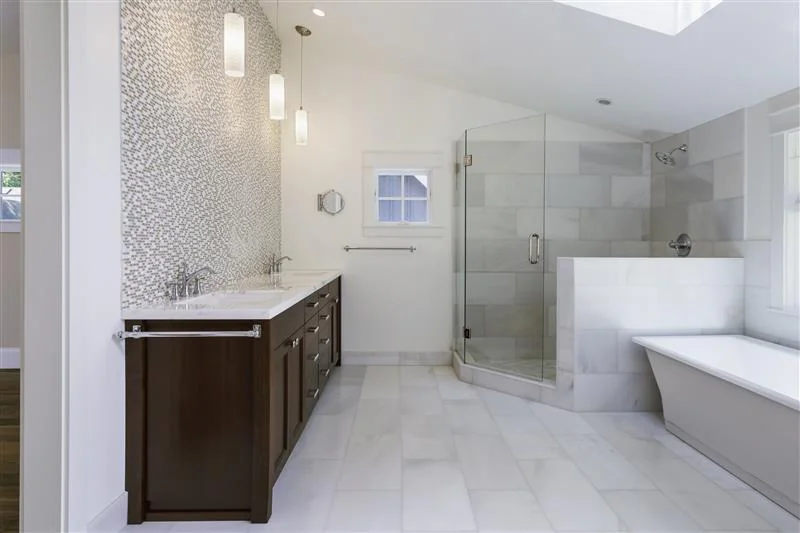
The process starts with understanding your specific needs and the unique aspects of your space. Custom tile work with patterns designed for your exact dimensions. Frameless glass shower enclosures built to fit perfectly rather than adjusted on-site to “make it work.” Custom cabinetry designed around your storage requirements instead of choosing from preset sizes. Specialty lighting planned intentionally for how you use the space.
In older Long Island homes, custom work solves problems that standard solutions create. Odd angles, sloped ceilings, vintage fixtures that don’t follow modern standards. Standard doors don’t work, and forcing them creates gaps, leaks, and doors that don’t close properly. Custom approaches measure your space precisely, then design solutions that work with your bathroom’s unique layout.
This level of customization takes longer because more work happens on-site. Tile installation, custom cabinetry, inspections, and finish work all require time and coordination. Timelines often range from six to ten weeks, sometimes extending to twelve weeks for complex projects. The tradeoff is time versus precision and getting exactly what you want rather than compromising to fit standard options.
Custom Glass Solutions for Complete Bathroom Transformations
Custom glass shower doors represent one of the highest-impact upgrades in bathroom remodeling, especially in Nassau County’s luxury market. Frameless glass enclosures make bathrooms feel larger by creating the illusion of space while letting light flow freely through the room. When you can’t see where your shower ends and your bathroom begins, everything feels more open.
The difference between standard and custom glass work comes down to fit and finish. Standard shower doors use predetermined dimensions with metal framing to hide gaps and accommodate variations in wall alignment. Custom frameless enclosures use thicker glass, usually half an inch, which allows them to skip the bulky metal framing entirely. Every piece gets cut to your exact measurements, with hardware positioned precisely where it needs to be for how you actually use the space.
In Nassau County, where homes often feature high-end finishes and contemporary design, seamless glass fits the aesthetic without competing with tile work or fixtures. The installation requires expertise because there’s no room for error. Measurements must account for how your bathroom actually is, not how it should be according to plans. Sealing, anchoring, and alignment all need to be correct the first time.
Custom glass work adds between $8,000 and $12,000 in perceived value to Nassau County properties, making it one of the upgrades with the best cost-to-value ratio. It’s a smart way to elevate bathroom design without taking on the added costs associated with structural or plumbing changes. The investment delivers high visual impact while solving practical problems like making tight spaces feel larger and reducing maintenance from grout lines and metal frames that corrode or accumulate soap scum.
Elderly Bathroom Remodel: Accessibility and Safety Features
Aging-in-place bathroom modifications represent a growing segment of Nassau County remodeling projects. More than 10 percent of adults 65 and older experience falls that result in injuries each year, with most of these falls happening at home and primarily in the bathroom. A senior-friendly bathroom allows older adults to stay in their homes longer, maintaining independence in a place where they feel comfortable.
Accessible bathroom remodeling means integrating safety features like grab bars, curbless showers, non-slip flooring, and shower benches into the design. The best time to plan these features is before you need them, not after a fall or injury forces reactive changes. Early planning allows you to phase work, control costs, and preserve finishes you love while weaving in universal design essentials.