

Summary:
Your bathroom door hits the vanity when you open it. You turn sideways to get past the sink. The shower curtain sticks to you every morning. And somehow, there’s never enough space for your stuff.
Living with a cramped bathroom isn’t just annoying—it’s a daily frustration that starts and ends every day on the wrong note. Small bathroom remodels done right can double the perceived space, fix the layout disasters that make you grit your teeth, and add real value to your Nassau County home. What separates success from expensive regret is knowing which changes create actual impact and which contractors understand how to maximize every inch. Here’s how to plan a small bathroom renovation that delivers the space and function you’ve been missing.
Small Bathroom Remodel Planning and Design
Planning determines everything in a small bathroom remodel. You’re working with maybe 35-50 square feet, which means every single decision—from toilet placement to door swing direction—carries weight it wouldn’t in a larger space.
Start by identifying what actually drives you crazy. Is it the lack of storage that leaves your counter cluttered? The dark cave feeling? The tub you never use hogging half the room? These specific pain points should guide your priorities. A bathroom renovation that doesn’t solve your real problems just gives you a prettier version of the same headaches.
Budget needs to match reality. Small bathroom remodels in Nassau County typically run $10,000 to $30,000 depending on scope, materials, and whether you’re relocating plumbing. That number climbs fast when you start moving pipes or uncovering water damage behind old tile. Set aside 10-15% as contingency—Long Island homes built before 2000 almost always hide surprises.
Layout Optimization Strategies for Tight Spaces
Layout changes make the biggest difference in how your small bathroom functions and feels. You’re not adding square footage, so you’re rearranging what exists to work smarter and feel more open.
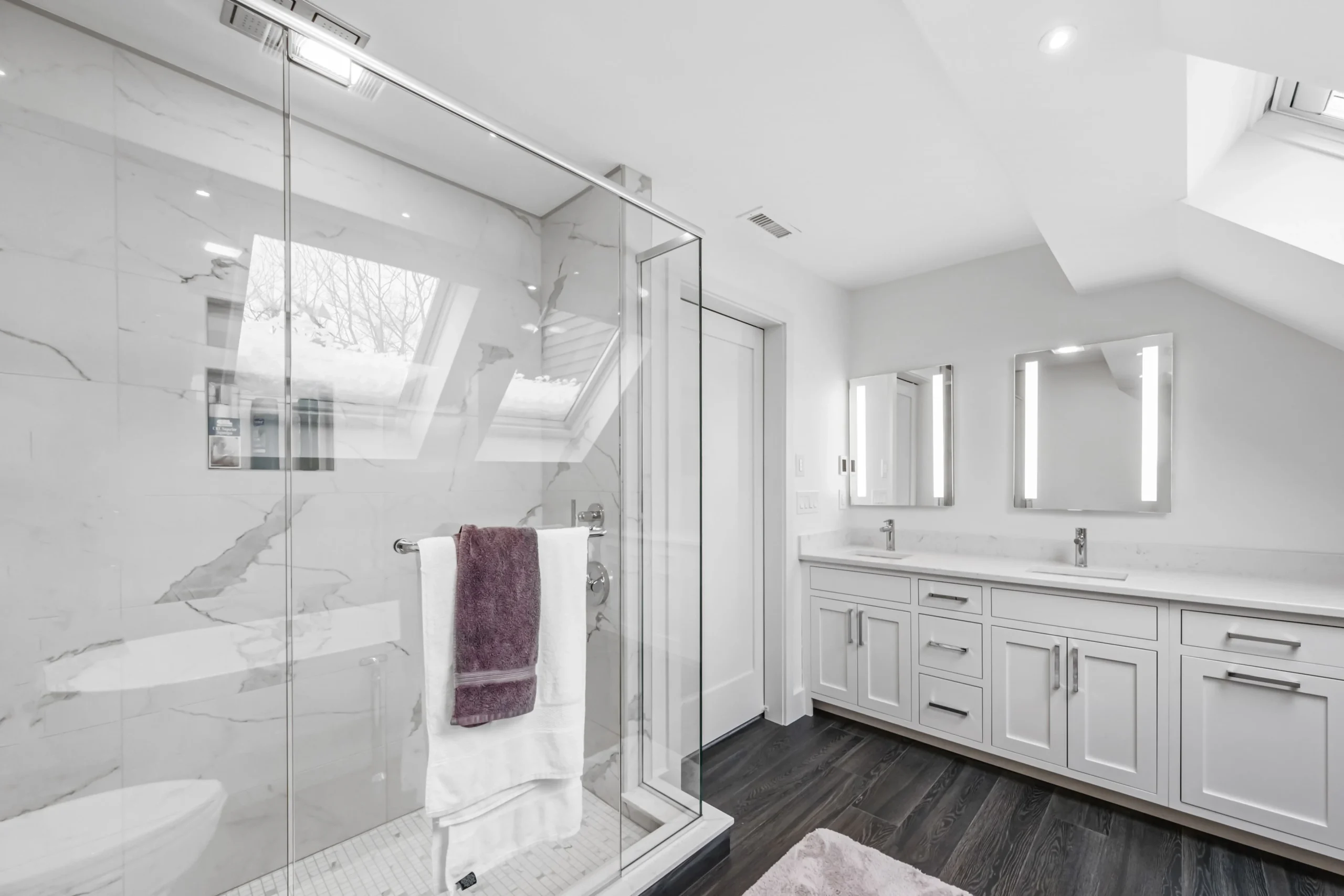
Corner showers are one of the most effective space-saving moves. Tucking the shower into a corner frees up valuable floor area and improves flow throughout the bathroom. Pair a corner configuration with a frameless glass shower enclosure, and suddenly the room doesn’t feel chopped into sections—your sightline travels all the way to the far wall instead of hitting an opaque barrier at the shower.
Door swing matters more than most homeowners realize until they live with it. An in-swing bathroom door that bangs into your vanity or toilet wastes space and creates daily annoyance. A pocket door that slides into the wall saves that swing space entirely. Barn doors that glide along the outside wall work too. Even switching your shower door from hinged to sliding can reclaim 8-12 inches of usable floor space.
Wall-mounted fixtures—floating vanities, wall-hung toilets—expose more floor, which tricks your brain into perceiving more room. The visible floor area matters. It’s not just aesthetic; it’s psychological and it works.
Storage planning can’t be an afterthought in a small bathroom remodel. Recessed shower shelves that sit flush with the wall, medicine cabinets that don’t protrude, vanities with deep drawers instead of cabinet doors—these solutions keep counters clear and your bathroom feeling organized instead of chaotic. Clutter makes any space feel smaller, but in a 40-square-foot bathroom, it’s suffocating.
Lighting transforms small spaces. Bathrooms often feel cramped because they’re dim. Layered lighting—ceiling fixtures, sconces flanking the mirror, LED strips under floating vanities—brightens the space and completely changes the mood. If you have a window, maximize that natural light. If you don’t, compensate with smart artificial lighting placement.
Material Selection and Color Strategies That Create Space
Materials and colors aren’t just design choices in small bathroom remodels—they’re functional tools that directly affect how large the space feels.
Light colors open up tight quarters. Soft whites, warm beiges, pale grays, light blues—these shades reflect light and push walls outward visually. Dark, moody colors can look stunning in design magazines, but in a 5×8 Nassau County bathroom, they often make the space feel more confined. If you love bold color, use it strategically as an accent wall or in accessories rather than covering every surface.
Large-format tiles reduce visual clutter significantly. Smaller tiles mean more grout lines, which chop up your floor and walls and make everything feel busy. Larger tiles—12×24 inches or bigger—create cleaner, more seamless surfaces with fewer interruptions. The same principle applies to patterns: too many competing tile designs create visual noise that shrinks the perceived space.
Glass is your most powerful ally in small bathroom remodels. Frameless or semi-frameless glass shower enclosures allow light to flow through the entire bathroom instead of stopping at an opaque shower curtain or solid door. Clear glass maximizes this light-flow effect, though frosted glass still outperforms curtains or solid barriers. The transparency creates visual continuity—your bathroom reads as one open area instead of separate, cramped zones divided by barriers.
Mirrors amplify both light and perceived space. A large mirror above the vanity reflects natural and artificial light, brightening the room and creating depth. The reflection tricks your eye into seeing more space than actually exists.
Consistency in materials matters. Running the same floor tile from inside the shower out onto the main bathroom floor removes visual breaks that segment the space. Fewer boundaries mean your eye travels farther, making the room feel larger. It’s subtle, but it works.
Installation Process: What to Expect During Your Bathroom Renovation
Understanding the installation process helps you set realistic expectations and avoid the surprises that derail small bathroom remodels. Most projects take 4-8 weeks from demolition to final walkthrough, though timelines vary based on scope, material availability, and permit approvals in Nassau County.
Demolition kicks things off—typically 1-2 days of removing old fixtures, tile, cabinets, and anything that isn’t staying. This phase gets loud and messy, but it’s necessary to create a clean slate. It’s also when hidden problems like water damage, mold, or outdated wiring reveal themselves. This is exactly why that 10-15% contingency budget matters.
After demo, rough-in work begins. Plumbers and electricians install or relocate pipes, drains, wiring, and ventilation systems. Rough-in typically takes 3-5 days and requires inspection before any work can continue. In Nassau County, this inspection isn’t optional—it’s mandatory for code compliance.

Renovation Timeline and Construction Phases
Once rough-in passes inspection, your bathroom starts taking visible shape. Drywall and insulation go up next, covering the skeletal framework and preparing surfaces for finishing. This phase takes 3-5 days and includes mudding, sanding, and ensuring walls are level and smooth.
Tile installation is usually the most time-consuming step in small bathroom remodels, often taking 5-7 days or longer depending on tile size and design complexity. Smaller tiles and intricate patterns take more time than large-format tiles with simple layouts. Your tile setter needs to ensure proper waterproofing, correct elevation, and thorough grout sealing. Rushing this step creates leaks and failures later.
Fixture installation follows tile work. Your new shower, toilet, vanity, and sink get connected during this 2-3 day phase. Faucets, showerheads, lighting fixtures, and hardware all get installed. If rough-in was planned correctly, this step should proceed smoothly without surprises.
Final touches include painting, trim installation, mounting accessories like towel bars and toilet paper holders, and thorough cleaning. We walk through the completed space with you, creating a punch list of any remaining items needing attention. Once that punch list is complete and final inspection passes, your bathroom is ready to use.
The entire active construction phase—demolition through final walkthrough—usually spans 4-8 weeks for a small bathroom. Pre-construction planning, design finalization, and permit approval add another 2-8 weeks before physical work begins. Factor in potential delays for custom material lead times, inspection scheduling, or unexpected structural issues discovered during demolition.
Communication throughout the installation process keeps everything on track. You should know what’s happening each week, when Nassau County inspections are scheduled, and if any changes or issues arise. Surprises during a bathroom renovation are stressful; clear, detailed communication makes the process manageable instead of maddening.
Nassau County Permit Process for Bathroom Renovations
Nassau County requires permits for virtually all bathroom remodeling work, regardless of project size. This isn’t bureaucratic red tape—it’s designed to ensure your renovation meets safety standards, building codes, and proper installation practices.
Permits are mandatory for plumbing changes, electrical work, structural modifications, and layout alterations. Even if you’re just relocating a sink or adding a new light fixture, Nassau County wants documentation. Permit fees typically range from $200-$500 for smaller projects and $500-$1,500 for more extensive bathroom renovations.
The permit process involves submitting plans to Nassau County’s Department of Public Works, waiting for approval, and scheduling inspections at key phases—typically after rough-in work and again at project completion. Licensed professionals must handle plumbing and electrical work; Nassau County won’t approve permits for unlicensed work.
Skipping permits creates serious problems. If Nassau County discovers unpermitted work, you’ll face fines and may be required to tear out completed work and start over with proper permits. Insurance companies can deny claims for damage related to unpermitted renovations. When you sell your home, unpermitted bathroom work discovered during inspection can kill the deal or force you to correct everything at your expense.
We handle the permit process for you, which eliminates this stress. We know what documentation Nassau County requires, how long approvals typically take, and how to schedule inspections without delaying your project. The permit process adds 1-3 weeks to your timeline, but it protects your investment and keeps everything legal.
Building codes in Nassau County address critical safety elements—proper ventilation to prevent mold and moisture damage, electrical requirements for modern lighting and outlets, plumbing configurations that ensure adequate water pressure and drainage. These aren’t arbitrary rules; they protect your home’s structural integrity and your family’s safety.
Transform Your Small Bathroom Into Functional Space
Small bathroom remodels succeed when they solve real problems, not just update finishes. The right layout optimization, smart material choices, and custom glass shower solutions that let light flow freely can transform a cramped, frustrating space into something you actually enjoy using every single day.
Nassau County’s permit requirements protect your investment and home value—skipping them to save time or money creates expensive problems later. Work with contractors who understand local building codes, handle the permit paperwork correctly, and have a proven track record of installations that pass inspection the first time.
Your bathroom should work with your life, not against it. If you’re ready to stop squeezing past the vanity and start enjoying a space that feels open, functional, and designed for how you actually live, we bring over 20 years of experience maximizing small bathrooms throughout Nassau County with expert craftsmanship and transparent communication every step of the way.