Summary:
Why Glass Shower Doors Beat Every Other Option
There’s a reason frameless shower doors dominate bathroom remodels across Long Island. They solve problems shower curtains and old framed doors create. No more mildew-stained fabric. No more corroded metal frames that trap soap scum in every crevice.
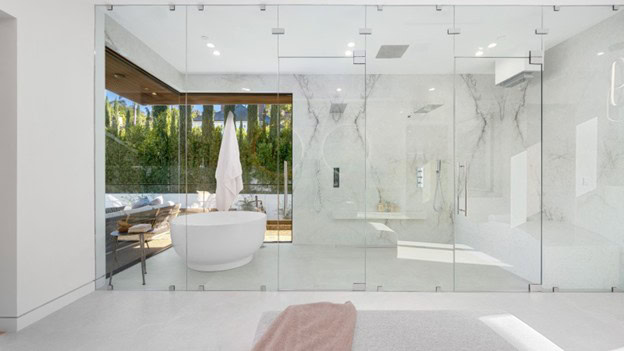
A quality glass shower enclosure opens up your bathroom visually. Light flows through instead of stopping at an opaque barrier. Your tile work—the part you probably spent good money on—actually gets showcased instead of hidden. And when it comes time to sell, buyers notice. Bathroom remodels on Long Island deliver about 60% return on investment, and a modern frameless shower door is one of those upgrades that signals the home has been maintained well.
Functionally, these doors just work better. Tempered glass holds up to daily use without showing wear. There are fewer parts to break or replace. Cleaning takes minutes instead of the scrubbing marathon you’re used to with framed doors. And with proper installation, they last 20 to 30 years—longer than you’ll probably own the house.

Frameless vs Semi-Frameless vs Framed Glass Shower Doors
Not all glass shower doors are created equal, and knowing the differences saves you from buyer’s remorse six months down the line.
Frameless shower doors use thick tempered glass—3/8 inch or 1/2 inch—with minimal hardware. No bulky aluminum frames wrapping around everything. Just clean glass panels held in place with discreet hinges and brackets. The glass itself provides the structural support, which is why it needs to be thick. The payoff? A modern look that won’t feel dated in a decade, easier cleaning since there’s nowhere for grime to hide, and no metal to corrode in your humid Long Island bathroom. This is what you see in high-end homes and design magazines, and it’s the most popular choice for a reason.
Semi-frameless doors give you a middle ground. The door panel is frameless, but there’s some framing around the fixed side or top for extra stability. This works well if your bathroom walls aren’t perfectly plumb—and most aren’t, especially in older Long Island homes. You still get a clean, modern appearance without paying for a fully frameless system. Installation is slightly easier too, which can trim labor costs. It’s a smart choice if you want the look without the premium price tag.
Framed shower doors have metal framing around the entire structure. They used to be the only option, and they’re still around because they’re the most budget-friendly upfront. The frame supports thinner glass, which costs less. But you’re trading affordability for maintenance. Those metal tracks and seals collect water, soap scum, and eventually mold. The aluminum corrodes over time. And let’s be honest—they look dated compared to frameless designs. That said, some homeowners are choosing framed doors with modern finishes like matte black or bronze to fit specific design styles. Just know what you’re signing up for maintenance-wise.
Your choice comes down to priorities. Want the cleanest look and easiest upkeep? Frameless. Need to work with a tighter budget or tricky wall conditions? Semi-frameless. Going for a specific traditional aesthetic or need the most affordable option? Framed can work.
What Separates a Quality Glass Shower Enclosure from a Cheap One
A shower door isn’t just glass in a frame. It’s a system, and every component has to hold up under daily use in a humid environment if you want it to last.
Start with the glass. All shower glass should be tempered—heat-treated to be four to five times stronger than regular glass. If it breaks, it shatters into small, blunt pieces instead of dangerous shards. That’s not a luxury feature; it’s a safety requirement. Some homeowners upgrade to low-iron glass (also called Starphire) because it’s ultra-clear without that greenish tint standard glass has. It’s more expensive, but if you invested in beautiful tile, low-iron glass lets you actually see it.
Hardware quality determines whether your door stays aligned or starts sagging after a year. Cheap hinges can’t handle the weight of heavy glass panels. Poorly rated brackets crack under stress. And if the finish isn’t designed for wet environments, you’ll see rust and corrosion fast. Stainless steel hardware is your best bet for Long Island bathrooms where humidity is a constant. Finishes like brushed nickel, matte black, or oil-rubbed bronze hold up well, but only if they’re specifically rated for moisture resistance.
Sealing is where a lot of installations fail. Frameless doors rely on precise caulking and silicone seals to keep water contained. If those seals are sloppy or skipped, you’re looking at water damage on your floors and walls. We make sure to leave just enough expansion space so the glass can shift slightly with temperature changes without breaking the seal. DIY jobs often miss this, and the leaks show up within months.
Then there’s the curb slope—the raised edge at your shower door. It needs to pitch inward by about 1/8 to 1/4 inch. Not level. Not sloping toward your bathroom floor. Inward. That slight angle keeps water from seeping under the door. Get it wrong, and no amount of caulk will save you. You’ll be dealing with mold, mildew, and potential damage to your subfloor.
How to Choose the Right Shower Door for Your Bathroom
Your bathroom isn’t a showroom, and what works in a magazine spread won’t necessarily work in your Nassau County colonial or Suffolk County ranch. The right shower door fits your space, your style, and your daily routine.
Start with the practical stuff. Measure your shower opening, but also look at the whole layout. Is there room for a door that swings outward? Or do you need a sliding door because the toilet is too close? How much clearance do you have around the vanity? These constraints narrow your options before you even think about aesthetics.
Next, match the door to your bathroom’s design. If you’ve got clean lines, white subway tile, and modern fixtures, a frameless glass enclosure fits right in. If your bathroom has more traditional details—ornate tile patterns, vintage-inspired faucets—you might want a semi-frameless door or even a framed option with hardware that complements your other finishes. The goal is cohesion, not fighting against your existing style.
Think about how you actually use your bathroom too. If you hate cleaning, frameless is your friend—fewer crevices mean less scrubbing. Some glass comes with protective coatings that repel water and make maintenance even easier. Worth the upgrade if you’re not into spending weekends with a squeegee.
Custom Glass Shower Doors vs Standard Sizes
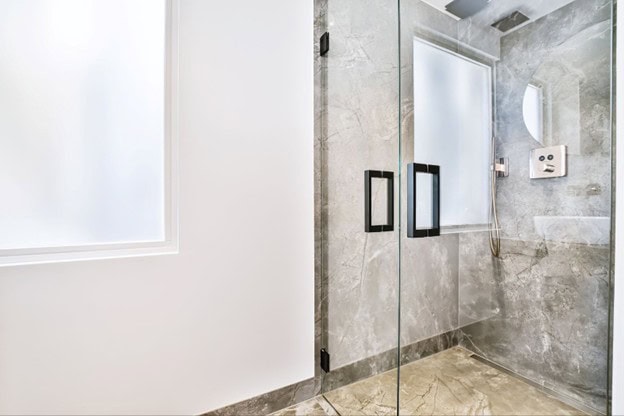
Here’s where homeowners get burned. You measure your shower opening, find a standard-sized door online, order it, and then discover it doesn’t fit. The walls aren’t plumb. The floor slopes. The width at the top is different from the width at the bottom. Welcome to real-world construction, especially in older Long Island homes.
Standard-sized shower doors work if—and this is a big if—your opening matches one of the common dimensions and your walls are perfectly square. That’s rare. Most bathrooms need at least some customization to get a proper fit. And with frameless doors, precision isn’t optional. An error as small as 1/16 of an inch throws off alignment, creates gaps, or puts stress on the glass that leads to cracks later.
We measure custom glass shower doors on-site and account for every quirk in your bathroom. We measure at multiple heights. We check for plumb on both sides. We note any irregularities in the walls or floor. Then the glass is fabricated to fit your exact space. That’s how you get doors that close smoothly, seal properly, and don’t leak. It costs more than grabbing a standard door off the shelf, but it eliminates the nightmare of returns, adjustments, and water damage repairs.
Timing matters too. If you’re doing a full bathroom remodel, the shower door is one of the last things installed. The tile needs to be finished. The walls need to be sealed. Everything needs to cure before accurate measurements can happen. Trying to order too early means guessing, and guessing leads to problems.
The other advantage of going custom? You get exactly what you want. Door height, glass thickness, hardware finish, hinge placement—it’s all tailored to your space and your preferences. You’re not limited to what’s in stock at the big-box store. For Long Island homeowners who’ve invested in a quality bathroom remodel, custom glass shower door installation is the detail that makes everything else look better.
Installation Mistakes That Cost Long Island Homeowners Thousands
Most shower door failures aren’t because the glass breaks. They’re because something went wrong during installation. And once the door is up, fixing those mistakes gets expensive fast.
The number one error? Bad measurements. Shower openings are rarely perfectly square, but DIYers measure once at eye level and call it good. We measure at three different heights and check both sides for plumb. We account for tile thickness, wall irregularities, floor slope—all the stuff that affects how the door fits. Skip this step, and you end up with gaps that leak or doors that won’t close properly.
Using the wrong hardware is another common failure point. Frameless glass is heavy. A large panel can weigh 100 pounds or more. If the hinges aren’t rated for that weight, or if they’re screwed into drywall instead of studs, they’ll fail. You’ll see sagging doors, misalignment, and stress cracks in the glass. All preventable with the right hardware installed correctly the first time.
Waterproofing gets skipped or done poorly more often than you’d think. Every joint where glass meets tile needs to be sealed with high-quality silicone. The curb needs the right pitch. The showerhead should be positioned so water doesn’t spray directly at the door seams. These aren’t optional details—they’re what keep water inside your shower instead of pooling on your bathroom floor and seeping into the subfloor.
Rushing the job is where DIY installs really fall apart. Glass needs careful handling. Hinges need to be aligned millimeter by millimeter. Seals need time to cure properly. We take our time because we know precision now prevents callbacks later. DIYers often rush to get the bathroom back in service, and that’s when mistakes happen that show up as leaks or alignment issues six months down the line.
And here’s one people don’t think about: ignoring the manufacturer’s instructions. Every bathroom glass door system has specific torque requirements for screws, specific clearances for panels, and specific sealing recommendations. Deviate from those specs and you void your warranty and create failure points. We know these systems inside and out. We’ve done hundreds of installations and know what works in real-world conditions.
Getting Your Glass Shower Door Installation Right
A quality glass shower door changes how your bathroom feels. It makes the space look bigger and brighter. It performs reliably for decades with minimal fuss. And it adds measurable value to your Long Island home when it’s time to sell.
But getting there takes more than picking a style you like and hoping it works out. You need the right glass thickness for your application. Hardware that’s built to last in humid conditions. Precise measurements that account for how your bathroom actually is, not how it should be. And installation by someone who knows how to seal, anchor, and align everything correctly the first time.
The gap between a shower door that works beautifully and one that leaks, sags, or cracks comes down to expertise and attention to detail. We’ve been serving Nassau and Suffolk County for over 20 years with that level of precision. From the initial consultation through final installation, our focus stays on getting it right—because your bathroom deserves a solution that actually works, not just one that looks good in photos.