Summary:
What Makes Frameless Shower Doors Different
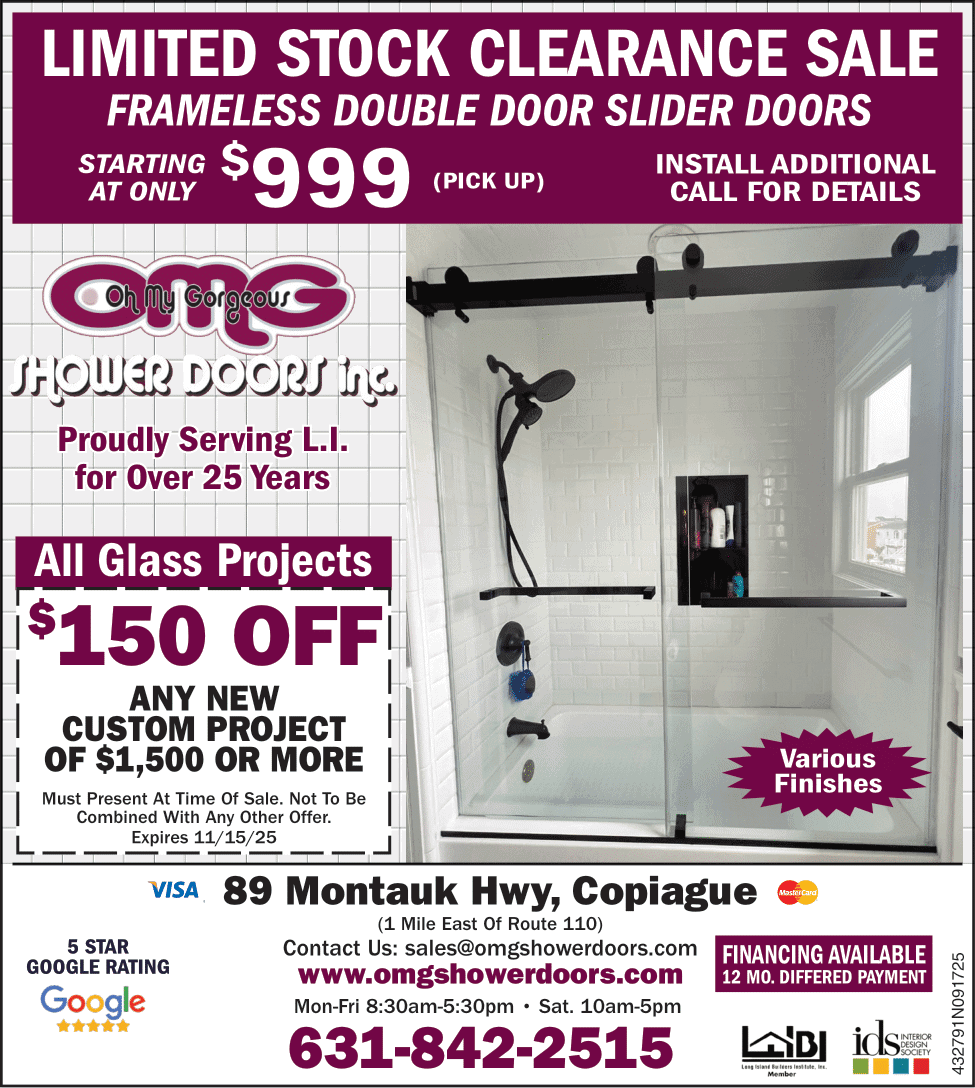
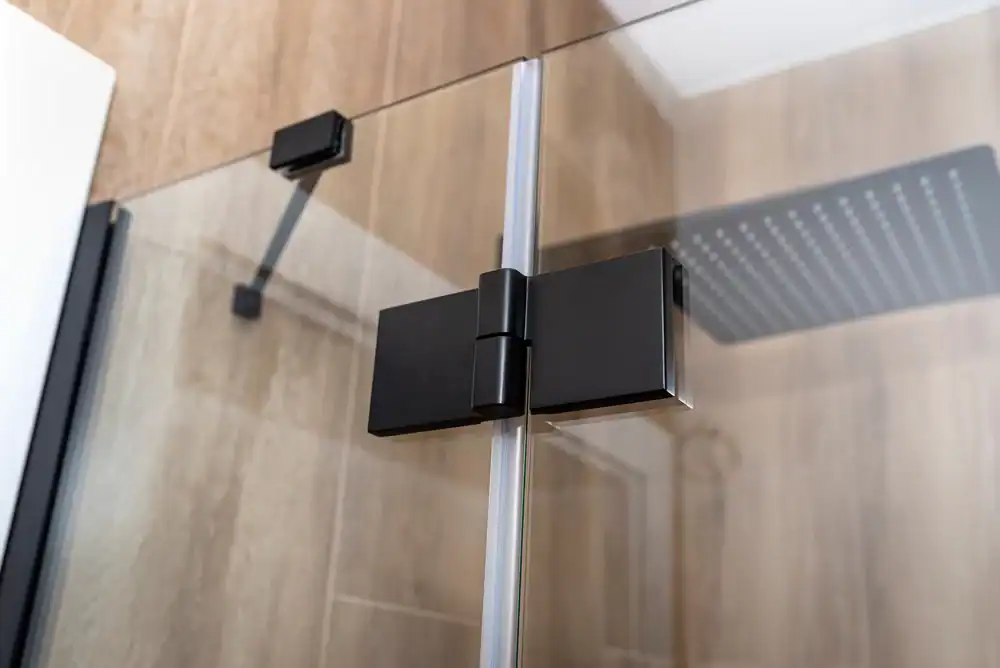
Custom frameless shower doors are thick glass panels held in place by heavy-duty hinges and clamps—no bulky metal frame surrounding them. The glass itself does the work, which is why it needs to be thicker: typically 3/8″ to 1/2″ tempered safety glass instead of the thinner panes you’d find in framed doors.
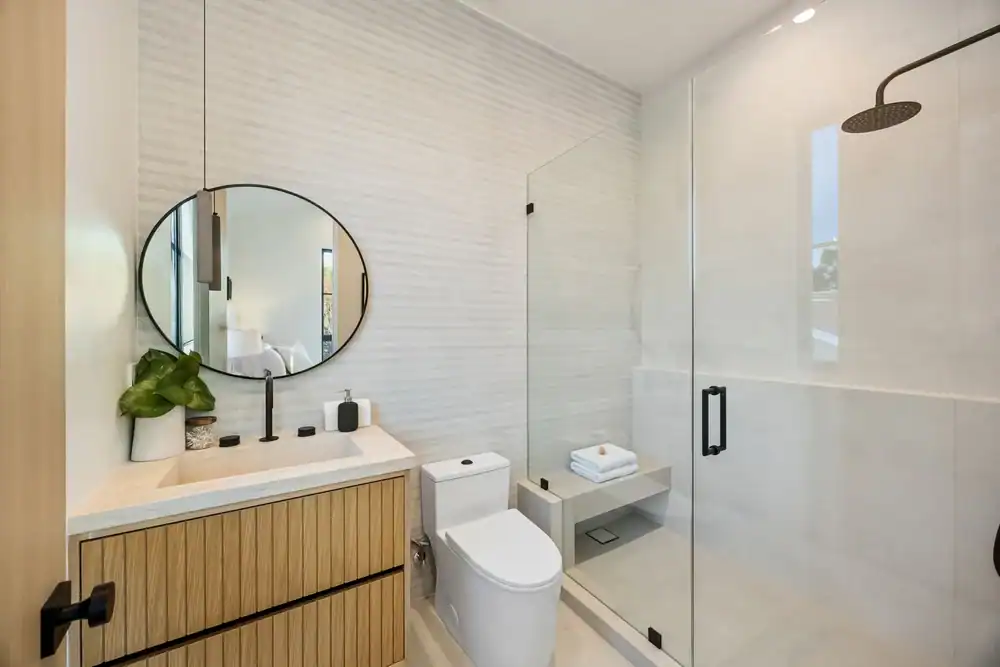
This design creates that clean, modern look where nothing interrupts the view into your shower. No metal frame blocking your tile work. No tracks collecting soap scum. Just clear glass that makes your bathroom feel more open and lets natural light flow through the space.
The catch is that installation has to be precise. Without a frame to hide gaps or cover imperfections, your walls need to be measured exactly and the glass custom-cut to fit your specific shower opening. There’s no room for “close enough.”

Why Long Island Homeowners Choose Frameless Shower Doors
Frameless doors make small bathrooms look bigger—a real advantage in older Long Island homes where bathroom space is at a premium. The clear glass creates visual continuity between your shower and the rest of the room. Your eye doesn’t stop at a bulky frame, so the whole space feels more open and airy. In a 5×8 bathroom, that perception matters.
Cleaning is straightforward. No metal tracks means no scrubbing soap scum out of channels. No corroded frames to deal with. No rubber seals that trap mold. A quick squeegee after your shower keeps the glass clear. Hard water spots still happen, but they wipe off smooth glass far easier than they scrub out of framed door crevices.
They add real value to your home. Bathroom updates typically return 60-80% of their cost at resale, and frameless shower doors are one of those upgrades buyers notice immediately. They signal that your bathroom is modern and well-maintained. In competitive markets like Nassau County and Suffolk County, that updated spa-like feel can make your home stand out.
The durability is genuine. Tempered safety glass is four times stronger than regular glass. Because there’s no metal frame to corrode, rust, or deteriorate from constant moisture exposure, frameless doors last for decades with proper care. You’re not replacing worn-out metal components every few years.
Customization fits your style. Clear glass for an open feel. Frosted or textured glass for privacy. Hardware finishes—matte black, brushed nickel, polished chrome—that match your existing fixtures. Whether your bathroom leans modern, traditional, or transitional, custom frameless shower enclosures adapt to fit.
Frameless Shower Door Cost and Long-Term Value
Custom frameless shower doors cost more upfront. Standard installations run $600 to $1,900. Custom enclosures with multiple panels or complex configurations can reach $1,400 to $3,300 or higher. That’s roughly 10-15% more than framed options—a difference that makes some homeowners hesitate.
The higher price reflects the materials and skill required. Thicker tempered glass costs more than the thinner panes in framed doors. Each piece is custom-fabricated for your exact shower opening, not pulled from standard inventory. Installation demands precision because there’s no frame to hide small gaps or wall imperfections. You’re paying for craftsmanship that gets it right the first time and prevents leaks that cause expensive water damage later.
Long-term maintenance costs tell a different story. Frameless doors don’t have metal frames that corrode or rubber seals in tracks that wear out and need replacing. You’re not dealing with mold growing in frame crevices or battling soap scum buildup in metal channels. The time you save on cleaning and the repair costs you avoid add up over the years your shower door is in service.
For older Long Island homes—colonials, Victorians, properties that have settled over decades—custom fabrication often makes more sense than trying to fit a standard door. Non-standard dimensions, walls that aren’t perfectly plumb, unique shower configurations: these situations need precise measurements and custom-cut glass to create a watertight seal. The alternative is gaps that leak water onto your floors and walls, causing damage that costs far more than the price difference between frameless and framed doors.
The investment makes sense when you value that modern aesthetic, want easier maintenance, and plan to stay in your home long enough to benefit from the durability. If budget is tight right now or you’re renovating a secondary bathroom where high-end finishes aren’t the priority, framed doors still work well. But for your primary bathroom where you want that spa-like feel and long-term value, frameless doors deliver.
How Framed Shower Doors Compare
Framed shower doors use a metal frame—typically aluminum—that surrounds the glass panels and provides structural support. The frame holds thinner glass in place and includes rubber seals and tracks that contain water. This design has been the bathroom standard for decades because it works: it’s functional, budget-friendly, and easier to install than frameless options.
The frame does multiple jobs. It supports thinner, lighter glass. It provides a track for sliding doors or a stable mount for hinged doors. It creates a sealed edge that helps prevent water from escaping your shower. And it covers small imperfections in walls or uneven surfaces, so installation doesn’t require the precision that frameless doors demand.
For secondary bathrooms, rental properties, guest bathrooms, or situations where budget drives decisions, framed doors deliver what you need without the premium price tag.
When Framed Shower Doors Are the Right Choice
Framed doors cost less—typically $400 to $1,100 installed. That’s 10-15% less than frameless options. When you’re managing a full bathroom renovation or juggling multiple home improvement projects, that difference frees up budget for other priorities. You still get a functional shower door that keeps water where it belongs. You’re just not paying for the premium aesthetic of all-glass construction.
Installation is faster and more forgiving. The metal frame covers gaps and provides structure, so walls don’t need to be perfectly level or plumb. Older Long Island homes that have settled over time? Framed doors adapt to those imperfections more easily. The installation process is quicker too, which matters when you only have one bathroom and need it back in service fast.
Water containment is reliable. The rubber seals in the frame and the bottom track create a tight barrier. If preventing leaks is your top concern—maybe you’ve dealt with water damage before or you have hardwood floors right outside the bathroom—framed doors provide that sealed protection through their design.
Style options have improved significantly. Framed doors aren’t just basic aluminum anymore. Brushed nickel, matte black, chrome, bronze finishes complement modern bathroom designs. Sliding doors save space in tight layouts. Pivot doors offer different configuration options. You can get custom framed doors tailored to your specific shower while maintaining the structural benefits and cost savings of a frame.
They make sense for specific situations. Guest bathrooms that don’t get heavy daily use. Rental properties where durability and cost-effectiveness outweigh high-end aesthetics. Bathroom remodels where the shower door is one component of a larger project and you need to allocate budget to flooring, vanities, or fixtures. Framed doors let you upgrade without overspending.
Maintenance Requirements for Framed Shower Doors
Framed shower doors demand more ongoing maintenance than frameless options. The metal frame and bottom track create crevices where soap scum, hard water deposits, and mildew accumulate. You’ll spend more time scrubbing around frame edges, cleaning out the bottom track, and dealing with buildup in corners where the frame meets the glass. It’s not impossible to keep clean, but it requires more effort.
The metal corrodes over time. Constant exposure to moisture and humidity deteriorates aluminum frames, particularly if you have hard water—which is common in many Long Island areas. You’ll notice discoloration, rough spots where the finish has worn away, or areas that look pitted. While this doesn’t immediately affect function, it impacts appearance and eventually requires replacement.
Rubber seals wear out and need replacing. The seals that create a watertight barrier around framed doors degrade with regular use. They become stiff, crack, or pull away from the frame. When that happens, water leaks onto your bathroom floor. You can replace these seals, but it’s an ongoing maintenance task you’ll need to factor in.
Mold and mildew find homes in tracks and frame joints. Even with regular cleaning, moisture gets trapped in these areas. Without diligent ventilation and cleaning, you’ll be dealing with black mold in tracks and corners. This isn’t just cosmetic—it’s a health concern for anyone with allergies or respiratory sensitivities.
The upside is that framed doors are more forgiving of less-than-perfect cleaning habits. The frame hides some wear and water spots that would be obvious on clear frameless glass. If you’re not someone who squeegees the shower door after every use, a framed door might show less obvious spotting.
Hard water makes the maintenance difference more noticeable. Mineral deposits build up faster in the crevices of framed doors. You’ll need vinegar solutions or stronger cleaners more frequently to keep the door looking decent. Frameless doors still get water spots, but they wipe off smooth glass far easier than they scrub out of metal tracks and rubber seals.
Framed doors require more hands-on maintenance. If regular deep cleaning doesn’t bother you, or you’re installing doors in a bathroom that doesn’t get heavy daily use, this might not be a dealbreaker. But if you want low-maintenance options that look clean with minimal effort, frameless doors have a clear advantage.
Making the Right Shower Door Choice for Your Home
Your choice between frameless and framed shower doors depends on what matters most to you. Want that modern, spa-like aesthetic and easier long-term maintenance? Frameless doors deliver, but you’ll invest more upfront. Working with a tighter budget or renovating a secondary bathroom where function trumps high-end style? Framed doors are practical and cost-effective.
Long Island homeowners have another factor to consider: your home’s age and condition. Older properties with non-standard dimensions or walls that have settled over decades often need custom frameless shower doors fabricated to fit precisely. Newer construction or homes with standard shower openings work well with either option.
Installation quality matters as much as the door style you choose. Proper measurement, quality materials, and skilled installation prevent the leaks and alignment issues that turn any shower door into a problem. Whether you go frameless or framed, working with a company that understands Long Island homes makes the difference between a shower that works beautifully for decades and one that causes headaches within months.
We’ve been serving Nassau County, Suffolk County, and Long Island for over two decades. Our team handles everything from custom frameless shower enclosures to quality framed installations, with the attention to detail that ensures your shower door fits perfectly, functions properly, and looks exactly how you envisioned.