
Glass Table Tops in Central Islip, NY
Protect Your Furniture Without Hiding Its Beauty

Hear from Our Customers
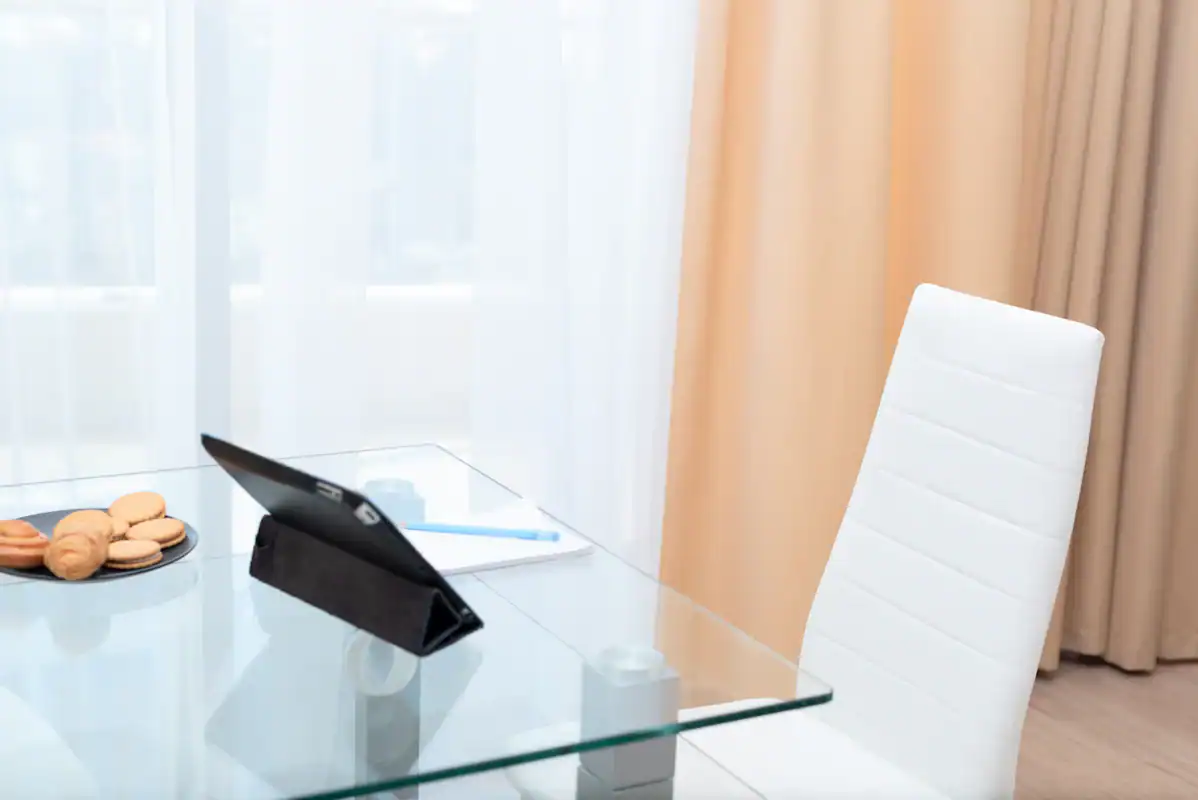
Custom Glass Table Tops Central Islip
You stop worrying about water rings from coffee mugs. No more cringing when someone sets something down without a coaster. Your wooden dining table—the one you spent good money on—stays protected from scratches, sun damage, and the daily wear that slowly ruins finish.
Glass table tops do more than protect. They make rooms feel bigger because they reflect light instead of absorbing it. They’re easier to clean than wood—one wipe and you’re done, no special polish or waiting for it to dry.
And when the glass is custom-cut to your exact measurements and properly tempered for safety, it doesn’t slip, doesn’t crack under normal use, and doesn’t turn into dangerous shards if something goes wrong. It just works.
Glass Services Central Islip NY
We’ve been fabricating custom glass solutions across Long Island for over 20 years. That includes glass table tops cut to size for dining tables, coffee tables, desks, and outdoor patio furniture throughout Central Islip and the surrounding Suffolk County area.
We hold Better Business Bureau certification and active memberships in LIBI and the National Kitchen and Bath Association. Every project gets the same approach: precise measurements, transparent pricing, and installation guidance that actually makes sense.
Central Islip residents have access to the same level of craftsmanship that’s earned us work in the Hamptons’ finest homes. The difference is in the details—accurate cuts, proper thickness recommendations based on your table size, and clear communication from quote to completion.
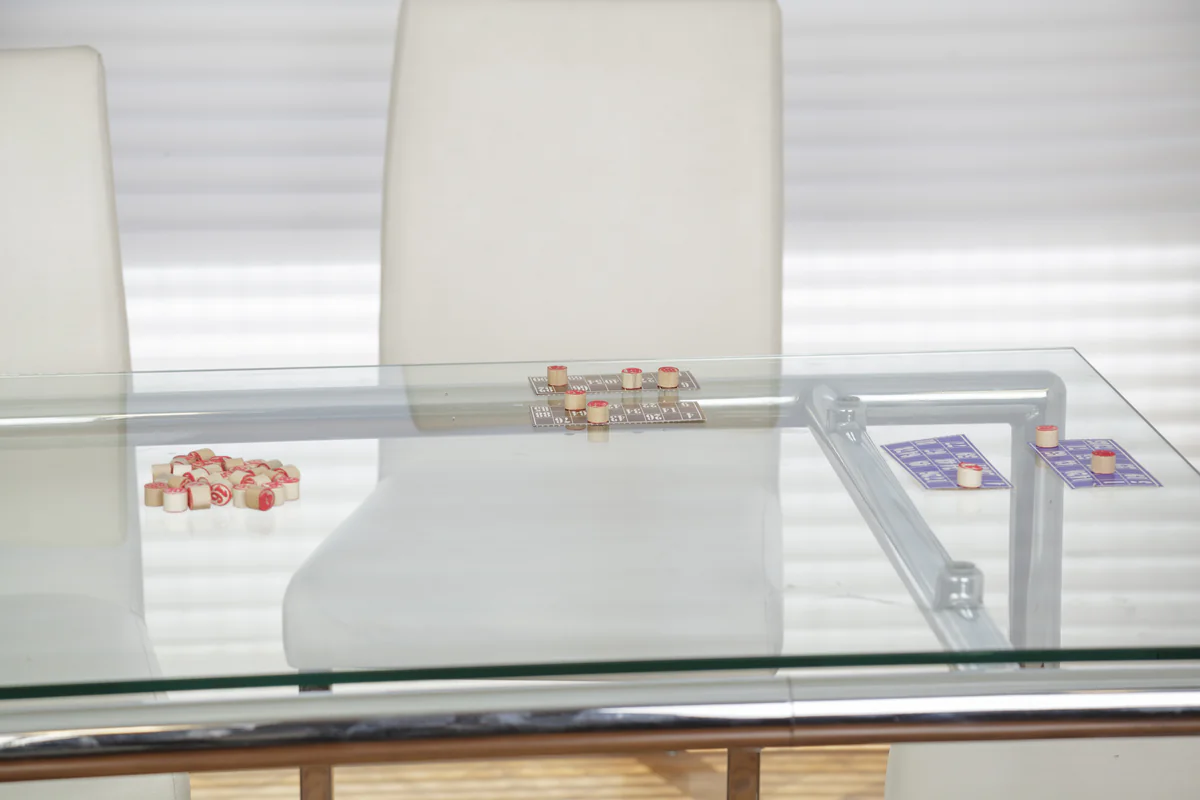
Custom Glass Table Tops Process
It starts with measurements. You can measure yourself or have us come out to do it—either way, precision matters because custom-cut glass doesn’t leave room for guessing. You’ll specify the shape (round, rectangular, oval, or custom), and any cutouts like umbrella holes for patio tables.
Next comes choosing thickness. If you’re adding a protective cover on top of an existing table, 1/4 inch tempered glass works well—it’s strong enough to protect without adding bulk. If the glass will be the actual table surface sitting on a pedestal or base, you’ll want 3/8 inch or 1/2 inch for the strength to support weight without flexing.
Edge finishing comes after fabrication. Polished edges are smooth and safe. Beveled edges add a refined look. Flat polished edges work for most applications. Corners get eased or rounded so there’s nothing sharp.
Then it’s about securing the glass properly. Depending on your table base—wood, metal, or pedestal—you might use clear rubber bumpers, adhesive pads, or table base adapters. The goal is stability without visible hardware that ruins the clean look. Installation guidance is part of the process, so you’re not left figuring it out alone.

Ready to get started?
Durable Glass Table Covers Central Islip
Every glass table top we fabricate uses tempered safety glass. That means it’s heat-treated to be four times stronger than regular glass and designed to break into small, dull pieces instead of dangerous shards if something ever goes wrong. It’s the same glass used in car windows—built for safety and durability.
You get custom sizing for any table shape. Round tops for patio tables. Rectangular covers for dining room tables. Oval glass for antique furniture. Custom cuts for irregular shapes that standard sizes won’t fit. Edge work is polished smooth, and corners are finished safe.
In Central Islip, glass table tops see a lot of use—from protecting family dining tables to covering desks in home offices to replacing broken patio table glass. Tempered glass handles temperature swings, which matters for outdoor furniture on Long Island where summer heat and winter cold put materials to the test. It resists scratches better than acrylic and doesn’t yellow or cloud over time like cheaper alternatives.
The glass is non-porous, so spills don’t soak in. Coffee, wine, kids’ juice boxes—it all wipes clean without leaving stains that settle into wood grain. And because glass reflects light, it brightens rooms that might otherwise feel darker, especially in spaces with limited natural light.
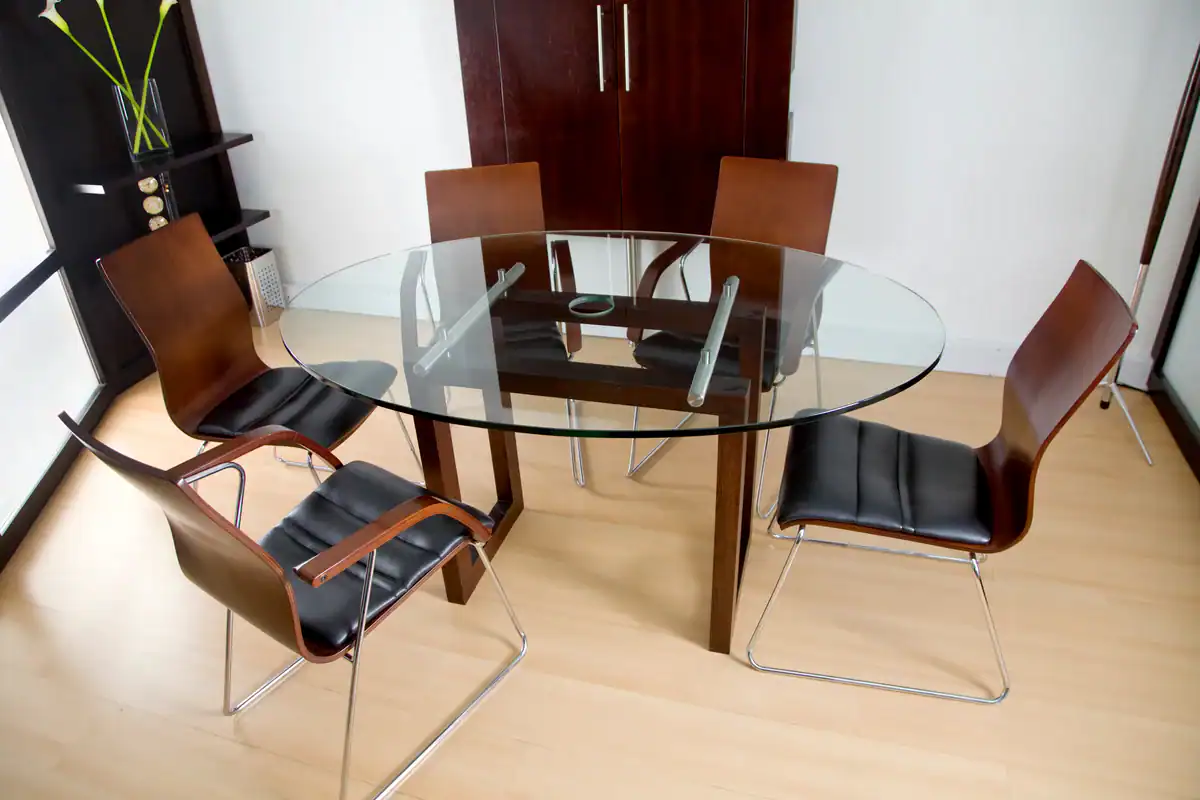
What thickness of glass do I need for my dining table?
It depends on whether the glass is a protective cover or the actual table surface. If you’re placing glass on top of an existing wooden or metal table to protect the finish, 1/4 inch tempered glass is usually the right call. It’s strong enough to handle daily use without adding too much weight or bulk.
If the glass will sit on a pedestal base or legs and function as the table surface itself, you need thicker glass—3/8 inch or 1/2 inch. Thicker glass has the structural strength to support plates, serving dishes, and whatever else goes on a dining table without flexing or cracking. For larger tables over 48 inches, 1/2 inch is the safer choice.
Table size matters too. Anything over 24 inches in diameter or length should be at least 1/4 inch thick minimum. Heavier use or unsupported spans need more thickness for safety and durability.
How do I keep the glass from sliding off my table?
The method depends on your table base material. For wooden tables, clear rubber bumpers work well—they’re small adhesive pads that stick to the corners of the table base and create friction between the wood and glass. They’re nearly invisible and prevent the glass from shifting when you move things around.
For metal or steel bases, glass table top adapters are a better option. These are aluminum disks that glue to the underside of the glass with clear epoxy, then bolt to the table base. It’s a secure connection that doesn’t show from above and keeps everything stable.
Some people use double-sided adhesive tape for lighter applications, but that’s more temporary. For tables that get regular use—dining tables, desks, coffee tables—you want something more permanent. The goal is stability without visible hardware that takes away from the clean look of glass.
Is tempered glass necessary or can I use regular glass?
Tempered glass is the right choice for table tops, especially if the table gets regular use or if you have kids. Regular glass (annealed glass) breaks into large, sharp shards that can cause serious injuries. Tempered glass breaks into small, relatively harmless pebbles because of how it’s manufactured—it’s heated and then rapidly cooled, which changes the internal structure.
Beyond safety, tempered glass is four times stronger than regular glass. It handles weight better, resists scratches and impacts more effectively, and stands up to temperature changes without cracking. That matters for outdoor patio tables in Central Islip where summer heat and winter cold can stress materials.
Regular glass might be cheaper upfront, but it’s not worth the risk. If a table top breaks—from something heavy dropping on it, a temperature shock, or just wear over time—you want it to break safely. Tempered glass gives you that peace of mind.
Can you cut glass to fit an antique or irregularly shaped table?
Yes. Custom glass fabrication handles irregular shapes, curved edges, and non-standard dimensions. The process starts with precise measurements—sometimes that means tracing the table edge on paper or providing a template if the shape is complex. For oval tables, you’ll need the exact length, width, and curve radius. For custom shapes, detailed drawings or tracings work best.
Glass cutting machines can create almost any shape as long as the measurements are accurate. That includes rounded corners, angled edges, or cutouts for table legs and pedestals. If you’re protecting an antique table, custom-cut glass is often the only option because standard sizes won’t match the unique dimensions of older furniture.
The key is getting the measurements right the first time. We can help with that if you’re unsure—better to have someone measure on-site than to order glass that doesn’t fit. Once fabricated, custom glass can’t be adjusted, so accuracy matters.
How do I clean and maintain a glass table top?
Glass table tops are easier to maintain than wood. For daily cleaning, a microfiber cloth and glass cleaner work fine—spray, wipe, done. No special polishes, no waiting for products to dry or soak in. The glass is non-porous, so spills don’t stain or settle in like they do with wood grain.
For stubborn spots or fingerprints, a mix of white vinegar and water works well. Avoid abrasive cleaners or rough sponges that can scratch the surface over time. Even though tempered glass is scratch-resistant, it’s not scratch-proof—dragging heavy objects across it without pads or coasters can leave marks.
Use coasters under glasses to prevent water rings, even though glass doesn’t absorb moisture like wood. Use placemats or trivets under hot dishes, especially if the glass is covering a wooden table underneath—you’re protecting the wood, not just the glass. Keep the surface clear of items that could scratch it when moved, like rough ceramics or metal objects without felt pads on the bottom.
What's the difference between a glass table cover and a glass table top?
A glass table cover sits on top of an existing table surface—usually wood—to protect the finish from scratches, water damage, and sun fading. It’s typically thinner, around 1/4 inch, because the table underneath provides structural support. The glass is just there for protection and to make cleaning easier.
A glass table top is the actual table surface. It sits on a base, pedestal, or legs and supports the full weight of everything placed on it. Because it’s load-bearing, it needs to be thicker—usually 3/8 inch or 1/2 inch—to handle the stress without flexing or cracking. Patio tables, modern dining tables with metal bases, and glass-top desks all use this type.
The installation method differs too. Covers often just rest on the table with rubber bumpers to prevent sliding. Table tops need more secure attachment—adapters, epoxy, or mounting hardware—because they’re the primary surface and need to stay firmly in place. Both use tempered glass for safety, but the thickness and how they’re secured depend on the application.
Other Services we provide in Central Islip