
Glass Table Tops in Flower Hill, NY
Custom Glass That Actually Fits Your Table

Hear from Our Customers
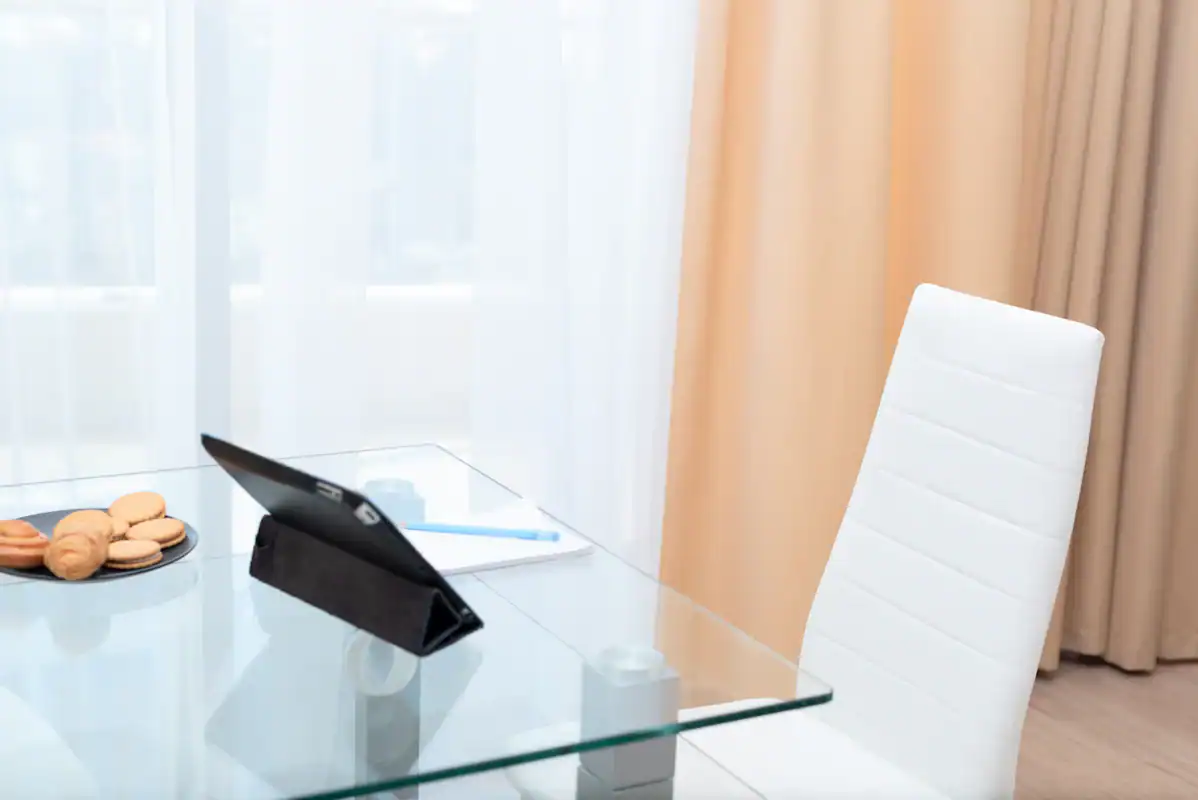
Custom Glass Table Tops Flower Hill
That wood dining table you spent thousands on doesn’t need to show every water ring and scratch from daily life. A custom glass table top gives you a crystal-clear barrier that takes the hit while your furniture stays pristine underneath.
You get the look you paid for without the constant worry. No more coasters everywhere, no more panic when someone sets down a sweating glass, no more watching the finish slowly deteriorate from sunlight streaming through your windows.
The right glass thickness means it holds up to real use. The right edge finishing means no sharp corners. And custom measurements mean it actually fits the first time, not “close enough.”
Glass Services Flower Hill NY
We’ve been fabricating custom glass for Long Island homes since the early 2000s. We work with the Hamptons’ finest properties and top contractors throughout the region, handling everything from protective glass covers to full custom table tops.
Flower Hill residents know quality matters. With median home values pushing $1.85 million in this community, furniture isn’t disposable. The families here invest in pieces worth protecting, and they expect the glass work to match that standard.
That’s why we hold Better Business Bureau certification and active membership in both LIBI and the National Kitchen and Bath Association. Every project gets transparent proposals, precise measurements, and the kind of attention to detail that keeps expensive furniture looking new for decades.
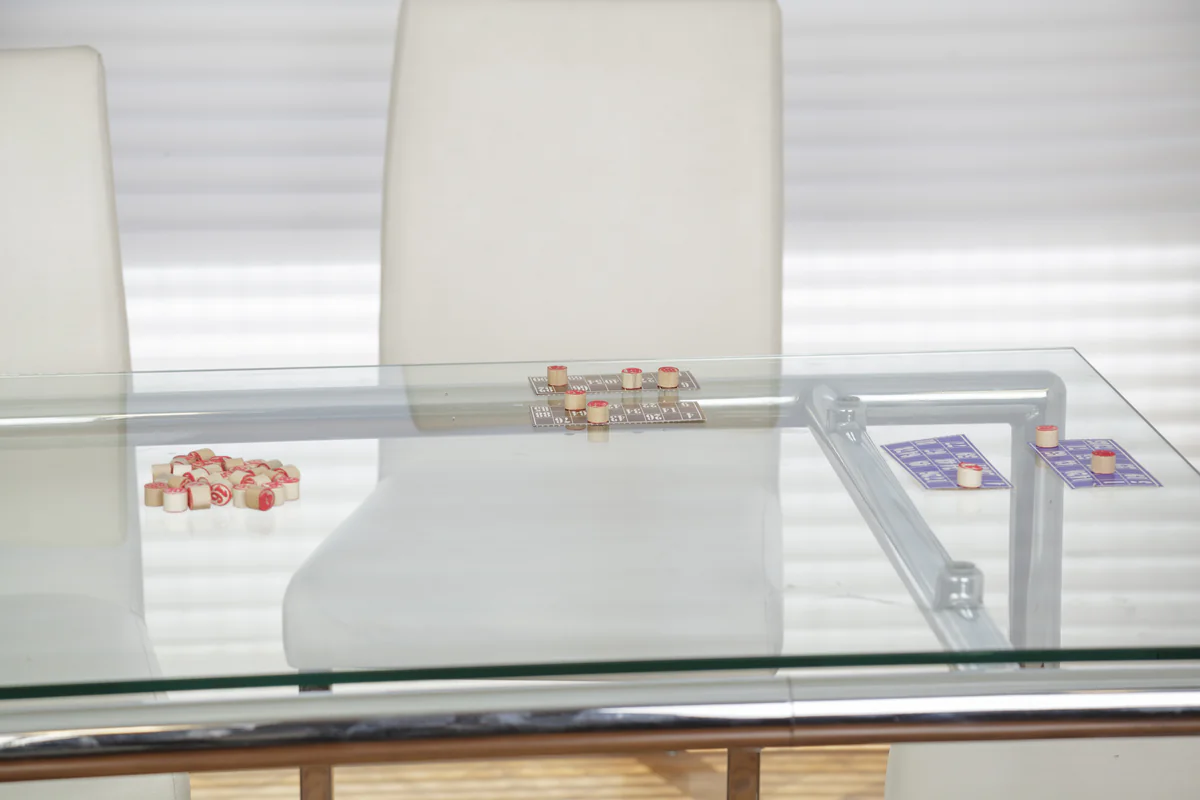
Glass Table Top Installation Process
The process starts with accurate measurements of your table. You can measure it yourself and provide dimensions, or schedule an on-site visit where we take a physical pattern of your table, including any irregular corners or curves. This eliminates the “hope it fits” problem that comes with ordering glass online.
Next comes selecting your specifications. Glass thickness depends on how you’re using it—1/4 inch works for protective covers over existing tables, while 3/8 to 1/2 inch is better for stand-alone glass tops or tables with minimal support underneath. You’ll also choose your edge finishing: polished edges for a modern look, beveled for formal settings, or pencil edges if you have kids who might bump into corners.
We fabricate the glass to your exact specs using tempered safety glass. Tempering makes it four to five times stronger than regular glass, and if it ever does break, it shatters into small harmless cubes instead of dangerous shards. Once it’s ready, installation is straightforward—the glass either rests on your existing table surface or gets mounted to your table base, depending on your setup.

Ready to get started?
Durable Glass Table Covers Flower Hill
Every glass table top we create is custom-cut to your measurements, not pulled from stock sizes that “might work.” You choose from clear glass for full transparency, low-iron glass that eliminates the greenish tint for ultra-clarity, frosted for a matte finish, or tinted options in gray or bronze. Back-painted glass is available if you want a solid color surface.
Thickness options range from 1/4 inch up to 3/4 inch, matched to your table’s size and support structure. All glass is tempered for safety—it’s not optional. Edge finishing includes seamed edges for framed applications, flat polished for clean modern lines, pencil polished for rounded safety, or beveled for decorative elegance.
In Flower Hill, where colonial homes line oak-shaded streets and properties stretch across acre-plus lots, furniture represents significant investment. Glass table tops protect antique dining tables in formal dining rooms, cover outdoor furniture on expansive patios, and preserve desk surfaces in home offices where professionals work remotely. Whether you’re in the Manhasset section near Americana Manhasset or closer to the Port Washington border, we determine the right glass thickness and edge style during consultation, not from a dropdown menu.
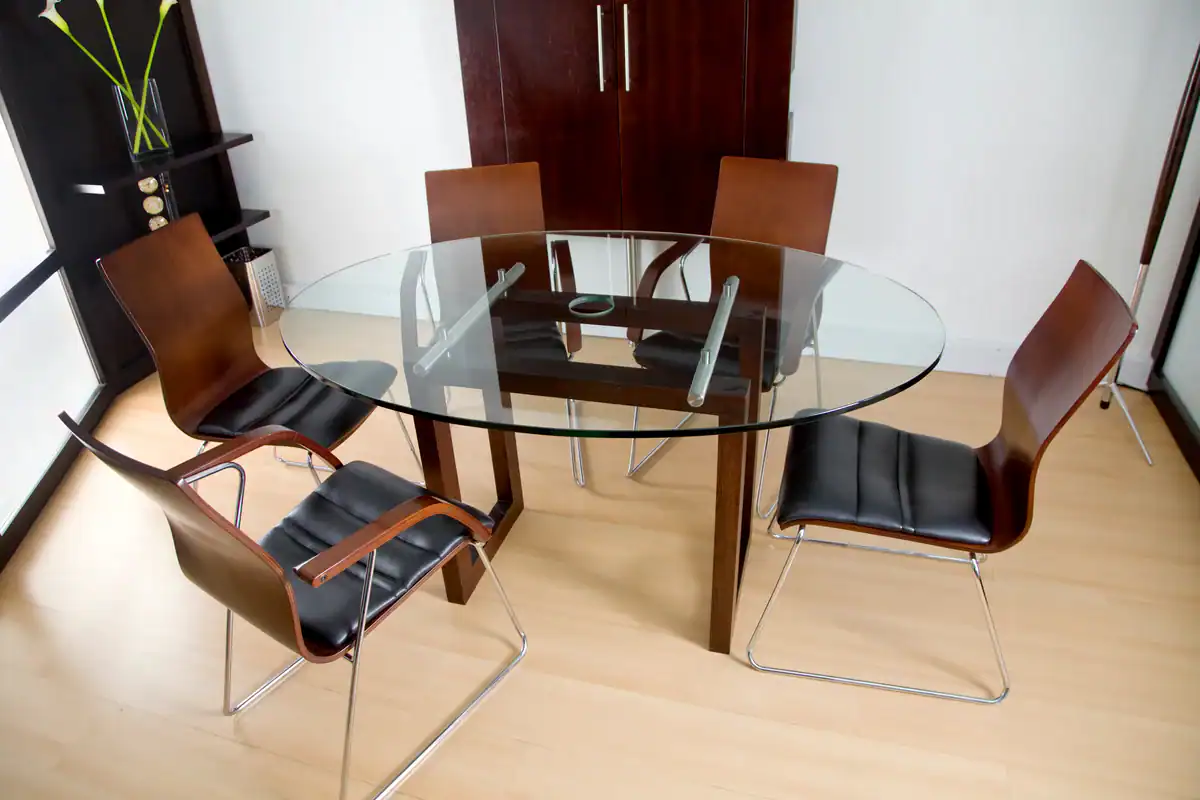
What thickness of glass do I need for my dining table?
If you’re adding glass as a protective cover over your existing wood or marble dining table, 1/4 inch tempered glass handles the job. It’s thick enough to resist scratches and protect the surface underneath without looking bulky or feeling heavy when you’re setting the table.
For a stand-alone glass dining table where the glass is the actual table surface, go with 3/8 or 1/2 inch thickness. This provides the structural strength needed to support dishes, serving platters, and everything else that ends up on a dining table during meals. The exact thickness depends on your table’s size and how much support the base provides underneath.
Tables larger than 24 inches in diameter need at least 1/4 inch minimum, but 1/2 inch is the sweet spot for most dining applications. It gives you durability without excessive weight, and it has the visual heft that looks intentional rather than flimsy.
Is tempered glass really necessary, or is regular glass fine?
Tempered glass isn’t just a recommendation—it’s a safety requirement for table tops. The tempering process heats the glass to over 1,000 degrees and then rapidly cools it, creating internal stresses that make it four to five times stronger than regular annealed glass.
The real difference shows up if the glass ever breaks. Regular glass shatters into large, jagged shards that can cause serious injuries. Tempered glass breaks into small, relatively harmless cubes with dull edges. In a home with kids, pets, or just normal activity, that distinction matters.
Tempered glass also handles temperature changes better, which is important for tables near windows where sunlight creates heat, or for outdoor patio tables exposed to weather. It’s more resistant to scratches and impacts from daily use. The cost difference is minimal compared to the safety and durability benefits.
How do I know if my measurements are accurate enough?
For rectangular or square tables with straight edges, measuring is straightforward—length, width, and note any corner curves. Use a tape measure and double-check your numbers. Most issues come from not accounting for corner radius or assuming corners are perfect 90-degree angles when they’re actually slightly rounded.
For round, oval, or irregularly shaped tables, or if you’re not confident in your measurements, an on-site measurement eliminates the risk. We create a physical template of your table, capturing every curve and irregularity. This is especially important for antique tables or custom furniture where dimensions might not be standard.
One common mistake is measuring the table base instead of where the glass will actually sit. If your table has a lip or raised edge, measure the surface where the glass rests, not the outer dimensions. Being off by even a quarter inch means the glass won’t fit properly.
What edge finishing should I choose for a table with kids around?
Pencil polished edges are your best option when children are in the house. This edge style rounds off the sharp 90-degree angle into a smooth, curved profile that’s much safer if someone bumps into it. The edges are fully polished to a glossy finish, so there’s no rough surface to catch on anything.
Flat polished edges have a clean, modern look with a squared-off 90-degree angle, but that sharp corner poses more risk in high-traffic areas or homes with young kids who are still working on their spatial awareness. Beveled edges have an angled cut that’s visually elegant but still presents a relatively sharp edge.
Seamed edges are only appropriate when the glass edge won’t be exposed—like when it sits inside a frame. For any table where the glass edge is visible and accessible, polished edges are non-negotiable for safety.
Can glass table tops handle hot dishes and everyday use?
Tempered glass resists heat better than regular glass, but it’s not invincible. It can typically handle temperatures up to about 470 degrees Fahrenheit before thermal stress becomes a concern. That means most serving dishes coming from your oven or stovetop are fine, but extremely hot cookware straight from a 500-degree oven should still go on a trivet.
The bigger concern is sudden temperature changes rather than steady heat. Setting a hot pan on cold glass creates stress points. Using trivets or hot pads provides a buffer that protects the glass and gives you peace of mind.
For everyday use—plates, cups, utensils, laptops, books, whatever normally ends up on your table—tempered glass handles it all without issue. It’s scratch-resistant, though not scratch-proof, so you’ll still want to use placemats under rough-bottomed items. Cleaning is simple: glass cleaner and a microfiber cloth keep it looking clear.
How much does custom glass table top installation cost in Flower Hill?
Cost depends on size, thickness, glass type, and edge finishing. As a baseline, tempered glass averages around $25 per square foot, but custom work with specific edge treatments or specialty glass like low-iron or tinted options can run $30 to $35 per square foot or more.
A typical dining table measuring 42 by 72 inches (21 square feet) with 1/2 inch tempered glass and polished edges would fall in the $525 to $735 range before installation. Smaller coffee tables or side tables cost less due to reduced square footage. Larger conference tables or oversized dining tables with 3/4 inch glass and beveled edges can exceed $1,000.
The investment makes sense when you’re protecting furniture worth several thousand dollars. A $600 glass top that preserves a $5,000 dining table for decades is cheaper than refinishing or replacing that table. We provide transparent proposals with exact pricing upfront, and we offer discounts for military, veterans, and first responders.
Other Services we provide in Flower Hill