
Glass Table Tops in Holbrook, NY
Glass That Fits Your Table, Not Close Enough

Hear from Our Customers
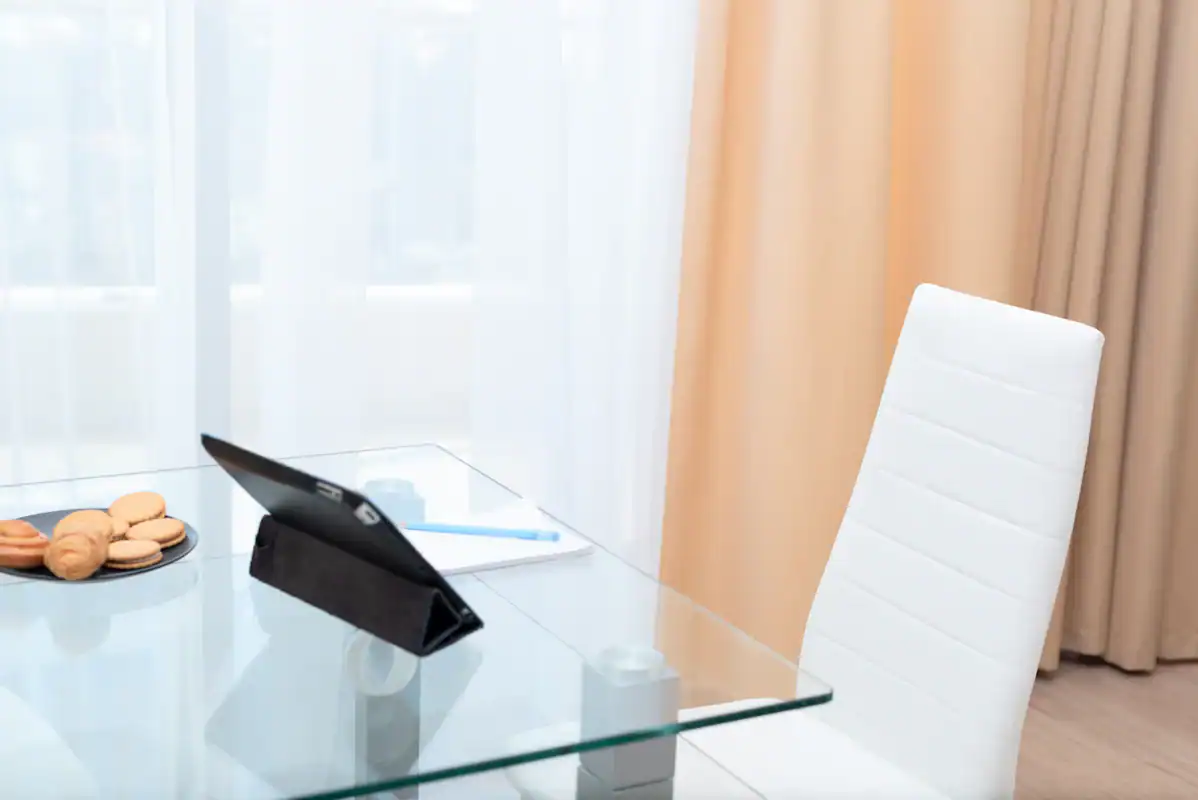
Custom Glass Table Tops Holbrook
No more coasters everywhere. No more worrying about water rings on that wood table you paid too much for. No more napkins under hot plates because you’re afraid of heat marks.
Custom glass table tops protect what’s underneath while keeping it visible. Your antique dining table, that mid-century desk, the patio furniture that’s seen better days—they all get a second life without looking covered up. The glass sits flush, stays put, and handles daily use without showing wear.
Tempered glass means safety. If something breaks, you get small harmless pieces instead of shards that send someone to urgent care. That’s not dramatic—that’s just what happens when you choose safety glass over standard glass.
Glass Services Holbrook NY
We’ve served Holbrook and Long Island for over 20 years. We handle custom glass projects from shower enclosures to table tops, all with the same attention to getting measurements right the first time.
Better Business Bureau certified. Members of the Long Island Builders Institute and National Kitchen and Bath Association. When you’ve been in business this long in the same community, your reputation isn’t something you gamble with. Holbrook residents and Hamptons homeowners both trust us because quality doesn’t change based on zip code.
You’re working with people who understand Long Island homes, show up on schedule, and answer the phone after the sale. That’s what 20 years of local business gets you—accountability that doesn’t disappear when things need adjusting.
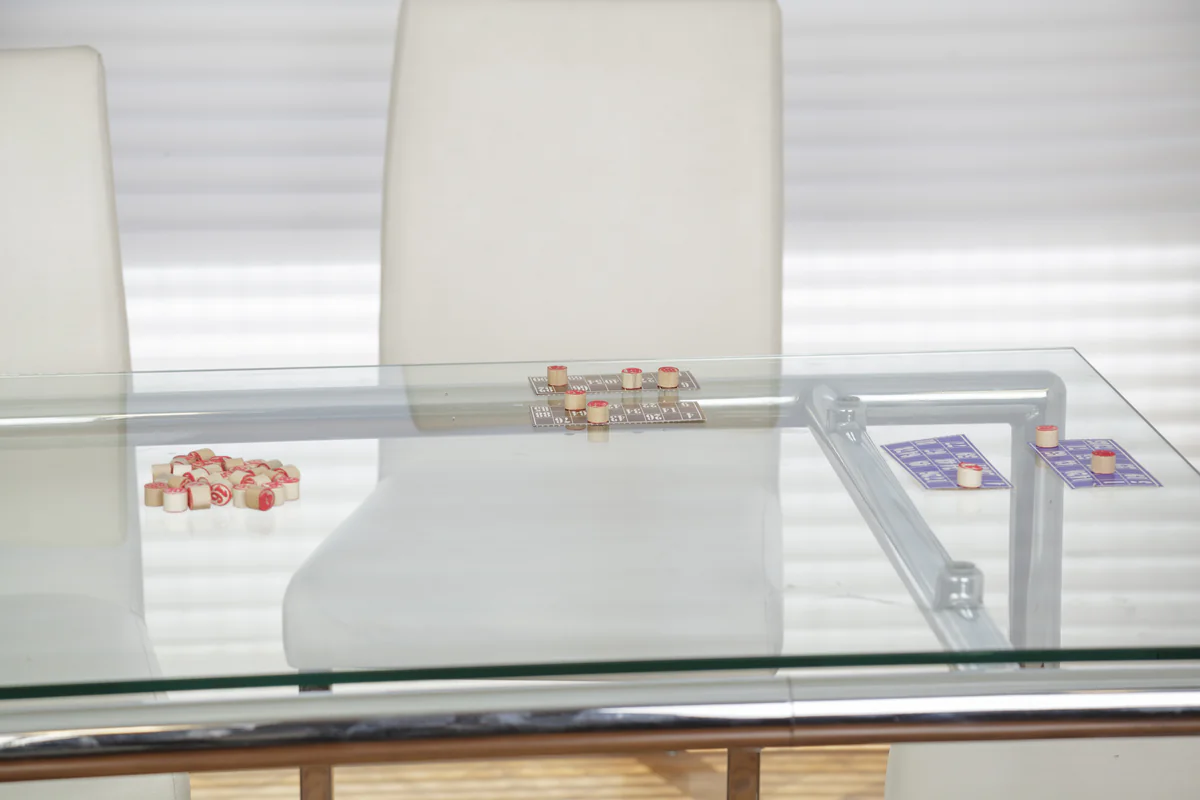
Custom Glass Table Installation Process
Accurate measurements come first. Measure your table length, width, or diameter at the widest points. Tables aren’t always perfectly square, especially older ones. Write everything down. Measure twice because ordering once is the goal.
Next, choose your thickness. Small tables under 24 inches work fine with 1/4″ tempered glass. Medium tables between 24-48 inches should use 3/8″ glass—that’s the standard for dining tables and desks. Large tables over 48 inches need 1/2″ thick glass to handle weight without flexing.
Edge style matters too. Pencil edge is smooth and rounded, safe for kids. Flat polish gives you clean modern lines. Beveled edges catch light and add visual interest. All edges get polished smooth—no sharp spots.
We cut the glass to your exact dimensions, then temper it through heat treatment that makes it four times stronger than regular glass. Edges are polished, quality checked, and ready for installation. You can place it yourself using felt pads or rubber bumpers at corners, or we can handle placement. Either way, you’re getting glass that fits right and stays stable.

Ready to get started?
Durable Glass Table Covers Holbrook
Every custom glass table top we make gets tempered for safety—that’s standard, not optional. Tempering makes the glass about four times stronger and changes how it breaks. Instead of dangerous shards, you get small blunt pieces that won’t send anyone to the emergency room.
Thickness options run from 1/4″ to 1/2″ depending on your table size and use. Edge finishing comes polished smooth in your choice of style. Pencil edge gives you rounded, safe edges. Flat polish creates clean modern lines. Beveled edges add dimension and catch light for a more refined look.
Holbrook homes need durable glass table covers that handle real life. Dining rooms where kids do homework between meals. Home offices that doubled as craft spaces during remote work. Patio furniture that sits outside through Long Island summers. The glass protects surfaces from scratches, heat, spills, and daily wear without hiding what’s underneath.
Local cutting means faster turnaround and someone to call if you need adjustments. Long Island furniture doesn’t always fit standard sizes—older homes have custom pieces, antique tables with irregular dimensions, handmade furniture that’s slightly off-square. Our local glass fabrication handles those quirks without forcing you into pre-cut sizes that almost fit.
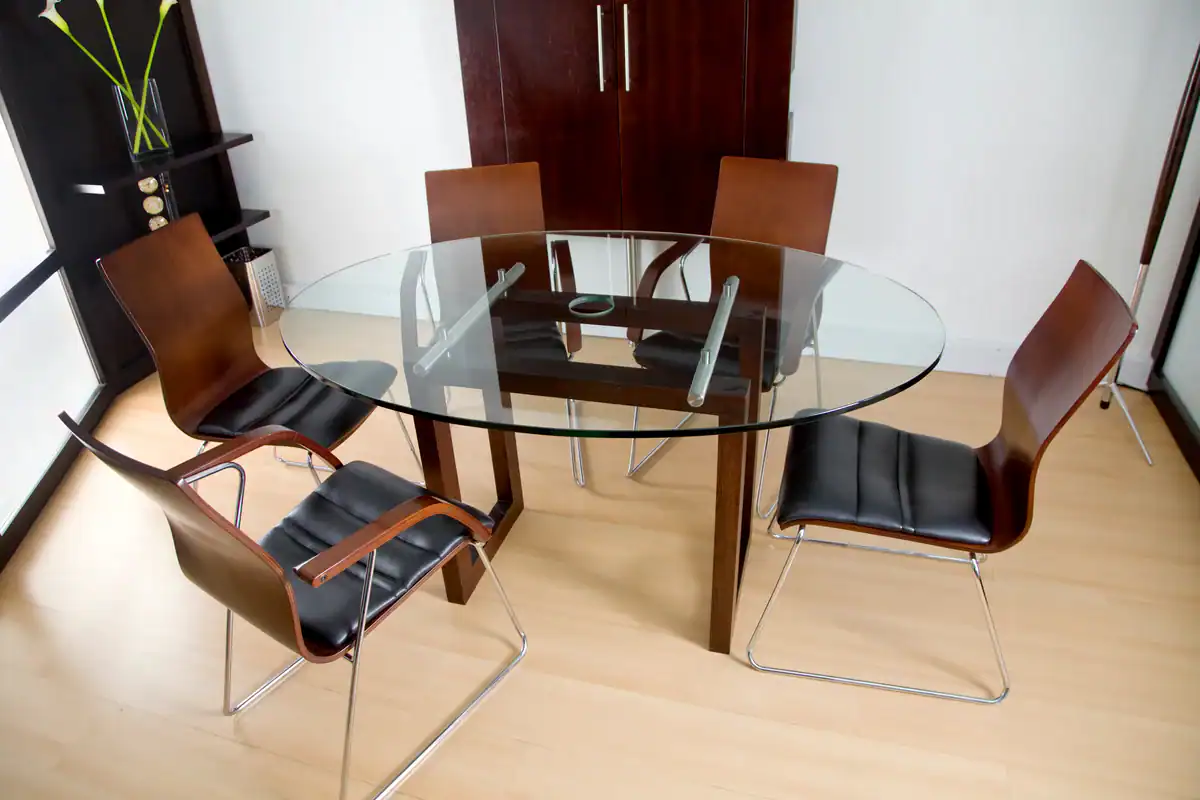
How thick should my glass table top be for a dining table?
Most dining tables need 3/8″ thick tempered glass. That thickness handles daily use—plates, serving dishes, elbows leaning on the table—without flexing or cracking. It feels substantial when you set something down, which matters when you’re using the table every day.
If your dining table is over 48 inches long or seats more than six people, go with 1/2″ thick glass instead. The extra thickness prevents any flex in the center and looks proportionally better on larger furniture. Thin glass on a big table looks cheap and feels unstable.
Smaller breakfast tables under 36 inches can work with 1/4″ glass if you’re just protecting the surface from light use. But for a main dining table where you’re serving hot dishes, doing homework, and generally living life, don’t cheap out on thickness. The difference between 3/8″ and 1/4″ is maybe $50-75, but one will last decades and one will crack within a few years.
Is tempered glass necessary or can I save money with regular glass?
Tempered glass is necessary for table tops. Regular annealed glass breaks into long, sharp shards that cause serious injuries. Tempered glass crumbles into small, relatively harmless pieces. That safety difference matters more than saving 15% on cost.
Beyond safety, tempered glass is about four times stronger than regular glass. It resists impacts better, handles temperature changes without cracking, and generally survives daily abuse. Regular glass might work fine for a picture frame, but a table top takes constant stress—items being set down, temperature changes from hot dishes, occasional impacts.
You can’t cut, drill, or modify tempered glass after it’s made. All customization happens before tempering. That’s why measurements need to be exact upfront. But that’s also why you’re getting glass that’s built specifically for your table and tempered for safety. Regular glass isn’t worth the risk or the shorter lifespan.
Will glass table tops work for outdoor patio furniture in Holbrook?
Yes, tempered glass handles outdoor use well. It resists UV rays without yellowing, manages temperature swings from summer heat to cool evenings, and doesn’t absorb moisture like wood. Long Island weather is manageable for quality glass.
Use rubber or silicone bumpers instead of felt pads for outdoor applications. Felt absorbs moisture and can grow mold. Rubber bumpers create a small gap for water drainage and won’t degrade in weather. Place them at each corner and along edges for stability.
One thing about Holbrook winters: while the glass itself handles cold fine, extreme temperature shocks can cause stress. If you’re leaving patio furniture out year-round, you’re probably fine. But if your table gets buried in snow and then you put something hot on frozen glass, that’s asking for trouble. Most people bring the glass inside for winter or at least cover the furniture. That extends the life and prevents issues.
How do I get accurate measurements for custom glass table tops?
Use a straight edge and a quality tape measure. For rectangular or square tables, measure length and width at the widest points. Don’t assume your table is perfectly square—older furniture rarely is. Measure in multiple spots and use the largest dimension.
Round tables need diameter measured across the center in at least two directions. If those measurements don’t match, your table isn’t perfectly round. Note the largest diameter. For oval tables, measure both the longest length and the widest width.
Write everything down immediately. Don’t trust your memory. If your table has curves, decorative edges, or irregular shapes, note where those features are. You can order glass to sit flush with the table edge or overhang slightly—usually 1/8″ beyond the edge. Most people go flush because overhanging glass is easier to chip.
If you’re replacing existing glass, use the old piece as a template. Measure it, note the thickness and edge style, and you have your specs. If measurements feel complicated or you’re worried about getting it wrong, having us measure in person eliminates mistakes. Getting it wrong costs more than a service call costs upfront.
What's the typical cost for custom glass table tops in Holbrook, NY?
Small table tops around 24 inches in 1/4″ tempered glass with a pencil edge run about $75-150. Standard dining tables around 42″ x 72″ in 3/8″ tempered glass typically cost $300-500. Large tables, thicker glass, or specialty edge finishing push costs higher.
You’re paying for precision cutting, safety tempering, and polished edges—not just raw glass. Cheaper options online often skip tempering or use thinner glass that won’t last. They also charge shipping costs for fragile material traveling across the country. Our local fabrication in Holbrook means no inflated shipping and someone who stands behind the work if something’s wrong.
Price also depends on glass type. Clear tempered glass is standard. Frosted, tinted, or specialty glass costs more. Edge finishing affects price too—flat polish is least expensive, beveled edges cost more due to extra labor. Get a quote based on your actual measurements and specifications rather than guessing from generic pricing. Every table is different.
How do I prevent the glass from scratching my table underneath?
Use felt pads, rubber bumpers, or clear adhesive dots between the glass and your table surface. These create a buffer that prevents scratching and allows air circulation. Without spacers, moisture can get trapped and damage wood finishes over time.
For valuable or antique tables, use clear silicone or rubber bumpers instead of felt. Felt can compress and trap dirt particles that scratch. Rubber stays consistent and doesn’t absorb moisture. Place bumpers at each corner and every 12-18 inches along edges for larger pieces. That spacing keeps the glass stable and distributes weight evenly.
Clean both the glass and table surface before placing the glass for the first time. Any dirt or debris underneath can scratch when the glass shifts slightly. Once it’s set up properly with spacers, your table stays pristine. The glass protects from spills, heat, and daily wear while the spacers protect from the glass itself. That’s the whole point—protection without damage.
Other Services we provide in Holbrook