
Glass Table Tops in Speonk, NY
Furniture Protection That Actually Looks Good

Hear from Our Customers
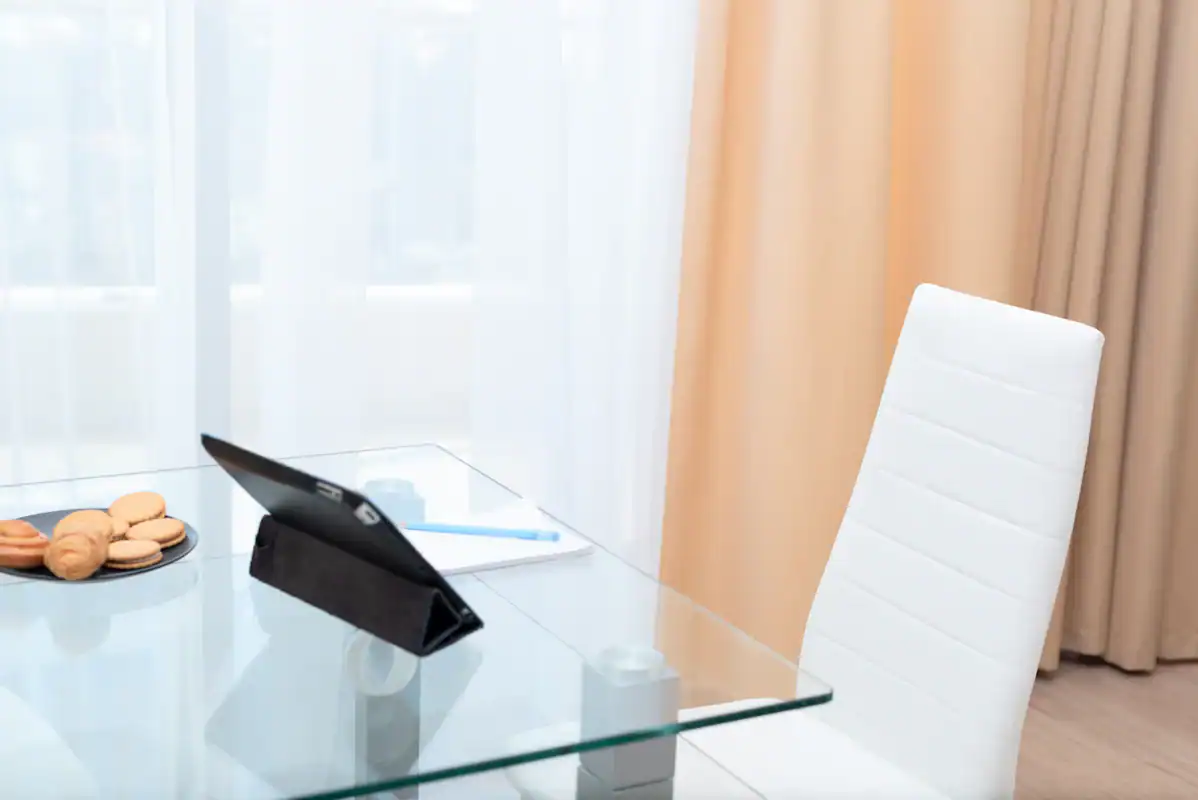
Custom Glass Table Tops Speonk
Your dining table has been through enough. The kids doing homework, hot plates from dinner, drinks that leave rings you can never quite buff out. Wood that looked perfect five years ago now shows every moment of use.
A custom glass table top stops that damage cold. You get a clean surface that wipes down in seconds, protection that actually works, and the original finish stays visible underneath. No refinishing, no staining, no guesswork about whether it’ll fit.
Tempered glass means it’s four times stronger than regular glass and breaks into harmless pieces if the worst happens. The right thickness—whether it’s 1/4″ for a protective cover or 3/8″ for a stand-alone surface—makes all the difference between something that flexes under pressure and something that holds up to real life.
Glass Services Speonk NY
We’ve been fabricating custom glass solutions across Long Island for over 20 years. That includes Speonk, where high-end homes and quality expectations come standard.
We hold Better Business Bureau certification and active memberships in LIBI and the National Kitchen and Bath Association. Our client list includes some of the Hamptons’ finest properties and the contractors who build them. We’re not new to this, and we’re not cutting corners.
Every project gets the same treatment: transparent proposals, exact measurements, and installation done right. Military, veterans, and first responders receive meaningful discounts—not token gestures.
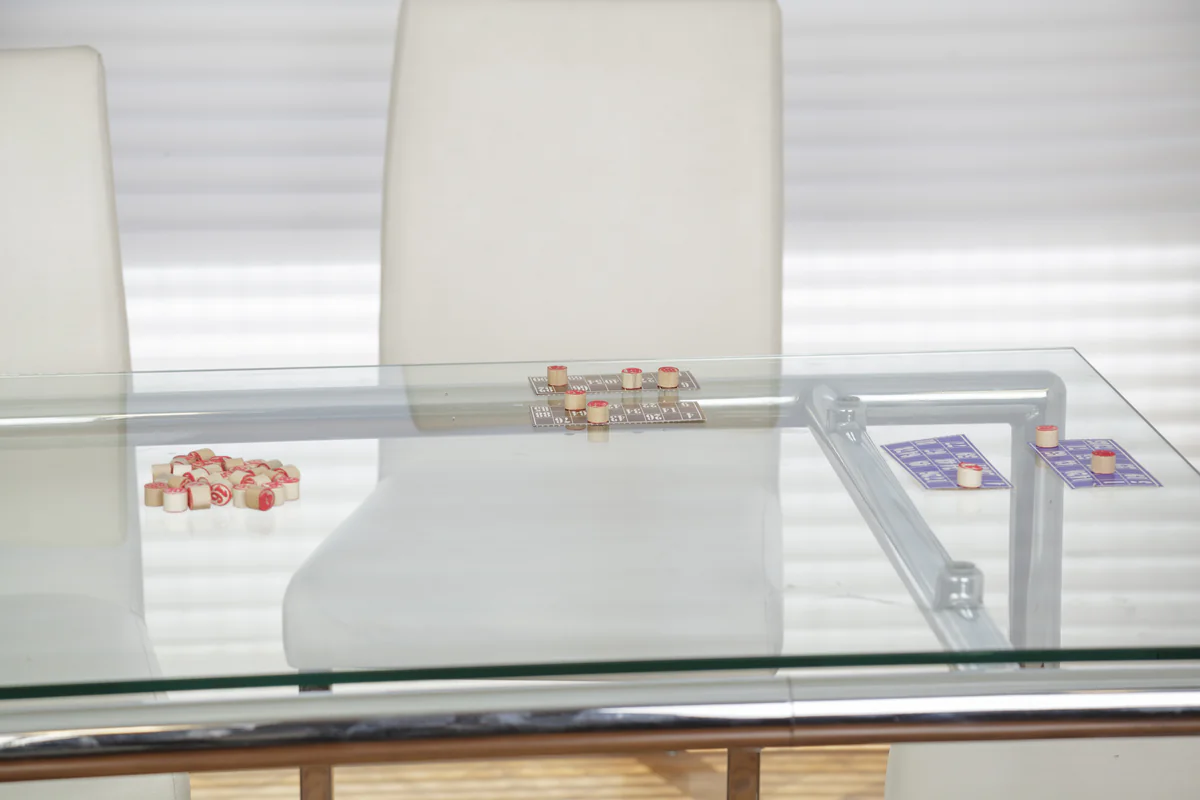
Custom Glass Table Tops Process
First, you reach out. A consultation happens—either at your property or through detailed communication about what you need. Table dimensions, current condition, how you use the space. All of it matters.
Next comes measurement. This isn’t a DIY tape measure situation. Precise measurements account for the table base, support structure, and how the glass will sit. Round, rectangular, oval, custom shapes—whatever fits your furniture gets documented exactly.
Then fabrication. Your glass gets custom-cut to specification, edges finished (beveled, flat polished, or pencil edge), and tempered for safety if that’s what the application requires. Thickness gets chosen based on whether this is a protective cover over existing wood or a stand-alone surface carrying weight.
Installation follows. The glass arrives, gets positioned, and you see immediately whether it fits. With proper measurement, it does. No gaps at the edges, no awkward overhangs, just clean protection that looks like it belongs there.

Ready to get started?
Durable Glass Table Covers Speonk
Our glass table tops come in multiple thickness options. A 1/4″ thickness works for protective covers—glass that sits on top of an existing table surface. It’s thick enough to lie flat without flexing, light enough to move when needed, and protects against scratches and spills.
For tables where glass serves as the actual surface, 3/8″ or 1/2″ thickness is standard. That’s dining tables with pedestal bases, coffee tables with minimal support, or any situation where the glass needs to carry weight without bending. Larger tables require thicker glass—simple physics.
Tempered glass is our default recommendation for anything in a home with kids, high traffic, or safety concerns. It costs slightly more but shatters into small, dull pieces instead of dangerous shards. Edge finishing options include beveled edges for formal dining tables, flat polished for modern aesthetics, or pencil edge for a softer look.
In Speonk, where homes average over $1 million in value and furniture investments run high, this level of customization isn’t excessive. It’s appropriate. You’re protecting pieces that matter, in spaces that get used daily, with solutions built to last decades.
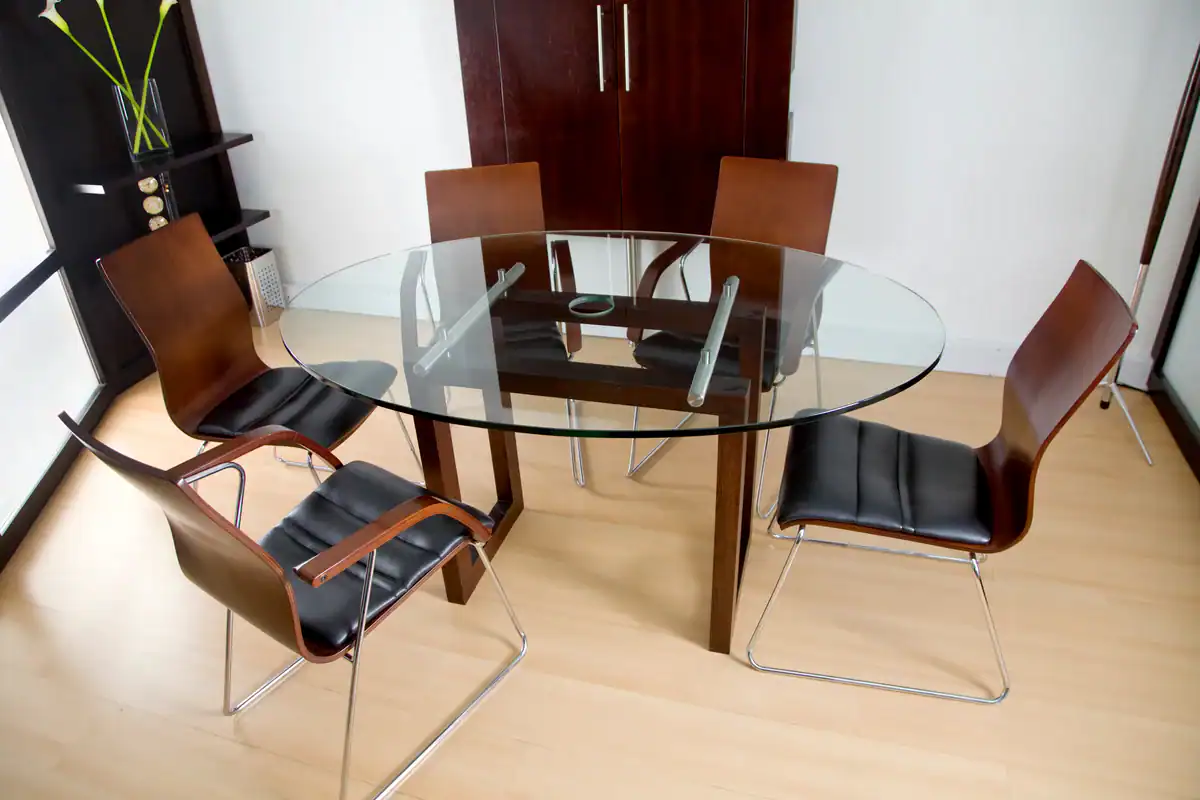
What thickness of glass do I need for my table?
It depends entirely on how the glass will be used. If you’re placing glass on top of an existing wood, stone, or metal table as a protective cover, 1/4″ thickness is usually adequate. The table underneath provides the structural support, so the glass just needs to be thick enough to lie flat and resist everyday scratches and spills.
If the glass is serving as the actual table surface—like a glass top on a pedestal base or a table with minimal frame support—you need thicker glass. For most dining tables and coffee tables in that category, 3/8″ thickness works well. Larger tables or surfaces that will hold heavy objects may require 1/2″ thickness or more.
The size of the table also matters. A small nightstand can get away with thinner glass. A 60″ dining table cannot. When in doubt, thicker glass provides more durability and a more substantial feel, but it also adds weight and cost. A professional measurement and consultation removes the guesswork.
Should I get tempered glass for my table top?
Yes, especially if the table is in a high-traffic area, used by kids, or serves as a primary dining or work surface. Tempered glass is heat-treated to be about four times stronger than regular annealed glass. More importantly, if it does break, it shatters into small, relatively harmless pebbles instead of sharp, dangerous shards.
Regular annealed glass is cheaper, but it breaks into jagged pieces that can cause serious injuries. That’s not a risk worth taking in most residential settings. Tempered glass also handles temperature changes better, which matters if you’re setting hot dishes or plates directly on the surface.
The only downside to tempered glass is that it can’t be cut, drilled, or modified after the tempering process. That’s why accurate measurements before fabrication are critical. Once the glass is tempered, what you see is what you get. But for safety and durability, it’s the right choice for nearly every table top application.
How do I measure for a custom glass table top?
Accurate measurement is everything. For rectangular or square tables, measure the length and width at the widest points. For round tables, measure the diameter. For oval or irregular shapes, creating a paper or cardboard template is the most reliable method—trace the shape, then provide that template to the fabricator.
You also need to account for overhang if you want the glass to extend beyond the base. Typically, 1″ to 2″ of overhang on each side looks proportional, but that depends on the table design and how it’s used. Too much overhang on a pedestal table creates instability. Too little makes the glass look undersized.
Here’s the reality: DIY measurements often miss critical details like slight irregularities in the table base or support structure. Professional measurement by a glass fabricator eliminates costly mistakes. We measure twice, account for the nuances, and ensure the glass fits correctly the first time. That’s especially important with tempered glass, which can’t be modified after fabrication.
Can glass table tops be used outdoors on patio furniture?
Yes, but outdoor applications require tempered glass and appropriate thickness. Patio tables face temperature swings, UV exposure, and weather elements that indoor tables don’t. Tempered glass handles those conditions better than regular glass and provides the safety factor you need in an outdoor setting.
For patio tables, 1/4″ to 1/2″ thickness is standard depending on the table size and frame support. Smaller tables with strong frames can use thinner glass. Larger tables or those with minimal support need thicker glass to prevent flexing or cracking under weight.
Edge finishing also matters outdoors. Polished edges resist chipping better than raw edges, and they’re safer if someone brushes against the table. Some homeowners also opt for tinted glass outdoors to reduce glare, though clear glass remains the most popular choice. Just make sure the glass is properly secured to the frame—outdoor furniture can catch wind, and you don’t want the glass shifting or sliding off.
How do I clean and maintain a glass table top?
Glass table tops are one of the easiest surfaces to maintain. For daily cleaning, a damp microfiber cloth works fine. For a streak-free finish, use a standard glass cleaner or a diluted vinegar solution. Spray the cleaner on the cloth, not directly on the glass, to avoid drips and streaks. Wipe in circular motions, then buff dry with a clean, lint-free cloth.
Avoid abrasive cleaners or rough sponges—they can scratch the surface over time. Paper towels also tend to leave lint and can cause micro-scratches, so stick with microfiber. For stubborn spots like dried food or sticky residue, let a damp cloth sit on the area for a minute to loosen it before wiping.
To prevent scratches during regular use, use coasters under drinks and placemats under dishes. Don’t drag heavy objects across the glass—lift and move them instead. Even tempered glass, which is highly durable, isn’t immune to surface scratches from rough handling. With basic care, a quality glass table top should stay clear and damage-free for decades.
How much does a custom glass table top cost?
Cost depends on size, thickness, glass type, and edge finishing. A small 1/4″ protective cover for a coffee table will cost significantly less than a large 1/2″ tempered glass dining table top with beveled edges. As a rough guide, expect to pay more for larger dimensions, thicker glass, tempered options, and premium edge finishes.
Custom fabrication costs more than off-the-shelf glass, but it also fits correctly. Standard sizes from big-box stores often leave gaps or overhangs that look wrong and function poorly. Custom glass gets cut to your exact specifications, which eliminates the fit issues and ensures the investment actually protects your furniture properly.
When comparing quotes, make sure you’re comparing equivalent products. Some companies quote annealed glass prices, then upsell tempered glass later. Others include installation in the base price, while some charge separately. We provide transparent proposals upfront—no hidden fees, no surprises during installation. You know what you’re paying before any work begins, and the price reflects the quality and precision you’re getting.
Other Services we provide in Speonk