Summary:
Your bathtub hasn’t seen a real bath in months. Maybe years. You step over that high wall every morning just to take a shower, and you’re tired of the awkward dance—especially when you think about aging parents or your own future mobility needs.
You’re not alone. Most Long Island homeowners use their tubs exclusively for showering, which makes that bulky fixture feel like wasted space in already-tight bathrooms. A tub to shower conversion can solve multiple problems at once: safety, space, and style. Here’s what you actually need to know about the process, costs, and decisions ahead.
The Tub to Shower Conversion Process in Nassau and Suffolk County
A tub to shower conversion isn’t just about ripping out your old tub and dropping in a new shower base. The process involves careful planning, proper permits, and skilled installation to ensure everything works correctly and meets local building codes.
The typical conversion starts with removing your existing bathtub, which often reveals plumbing that needs adjustment or updating. We modify the plumbing connections, install a new shower pan or base, and then build up the walls with your chosen materials—whether that’s tile, acrylic panels, or other water-resistant surfaces.
Most conversions in Long Island can be completed in one to three days, depending on the complexity of your plumbing situation and design choices. The key is working with contractors who understand Nassau and Suffolk County building requirements and can handle both the technical and aesthetic aspects of your project.
Building Permits and Code Requirements for Long Island Conversions
Here’s something many homeowners don’t realize until they’re already committed: bathroom conversions in Nassau County require permits for any project involving plumbing or electrical work. This isn’t optional—it’s required by local building codes, and skipping this step can create expensive problems later.
The permit process typically takes a few weeks and requires detailed plans showing your proposed changes. We handle this paperwork for our clients, but you’ll need to factor the time and cost into your project timeline. Permit fees vary by township, but expect to pay several hundred dollars for the required approvals.
Suffolk County has similar requirements, though specific rules can vary between townships. Some areas have additional restrictions about shower sizes, drainage requirements, or accessibility features. The good news is that we know these requirements inside and out and can guide you through the process without surprises.
Building inspections are part of the process too. You’ll typically need inspections at various stages—after rough plumbing work, before closing up walls, and after final installation. This might seem like a hassle, but it protects you by ensuring all work meets safety standards and won’t cause problems when you eventually sell your home.
Don’t try to skip the permit process. Unpermitted work can result in fines ranging from $500 to $5,000 in many Long Island townships, and it can complicate future home sales. Buyers and their inspectors will flag unpermitted bathroom work, potentially derailing your sale or forcing you to bring everything up to code at the worst possible time.
Timeline and What to Expect During Installation
Most Long Island homeowners are pleasantly surprised by how quickly a tub to shower conversion can be completed. Unlike full bathroom renovations that can take weeks, conversions typically wrap up in one to three days once permits are approved and materials arrive.
Day one usually involves demolition and rough plumbing work. We remove the old tub, assess the existing plumbing, and make any necessary adjustments to accommodate your new shower configuration. This is often the messiest part of the process, but we use protective coverings and proper disposal methods to minimize disruption to your home.
Day two focuses on installing the new shower base and beginning wall work. If you’re using prefabricated acrylic or fiberglass surrounds, this can move quickly. Custom tile work takes longer but gives you more design flexibility. We also rough in any new fixtures like grab bars, built-in seating, or multiple shower heads.
The final day involves finishing touches—installing shower doors, final plumbing connections, caulking, and cleanup. We can complete simpler conversions in a single day, especially if you’re using prefabricated components and the existing plumbing doesn’t need major modifications.
Weather can affect timelines if your project requires exterior work or if materials delivery gets delayed. Winter projects sometimes take slightly longer due to curing times for certain materials in cold temperatures. We provide realistic timelines based on your specific situation and the current season.
Cost Factors and Design Choices for Your Long Island Conversion
Tub to shower conversion costs in Nassau and Suffolk County vary widely based on your choices and existing conditions. Basic conversions using prefabricated acrylic surrounds start around $1,800 to $3,500, while custom tile work with high-end fixtures can reach $8,000 to $15,000 or more.
The biggest cost factors are materials, plumbing complexity, and design features. A simple swap using your existing plumbing connections costs significantly less than relocating drain lines or adding multiple shower heads. Similarly, prefabricated surrounds install faster and cost less than custom tile work, though tile offers more design flexibility.
Your choices here will determine both your upfront costs and long-term satisfaction with the results. It’s worth understanding the trade-offs before you commit to any particular approach.

Frameless vs Framed Shower Doors: Which Works Better
The shower door debate comes down to budget, maintenance preferences, and aesthetic goals. Framed doors cost 10-15% less than frameless options and offer excellent water containment with their built-in seals and tracks. They’re also easier to install and work well in most bathroom styles.
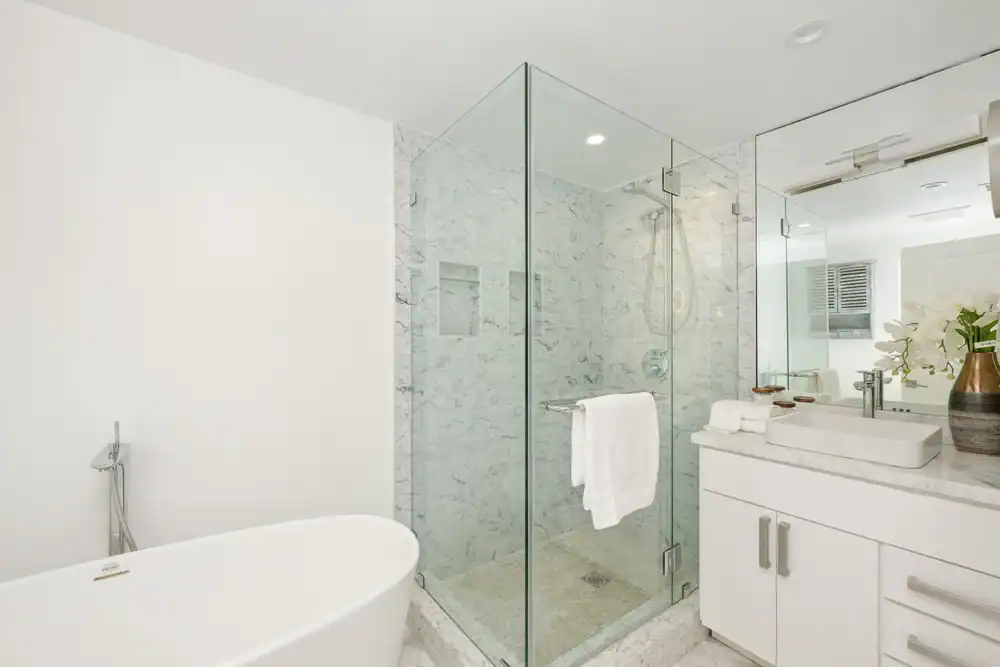
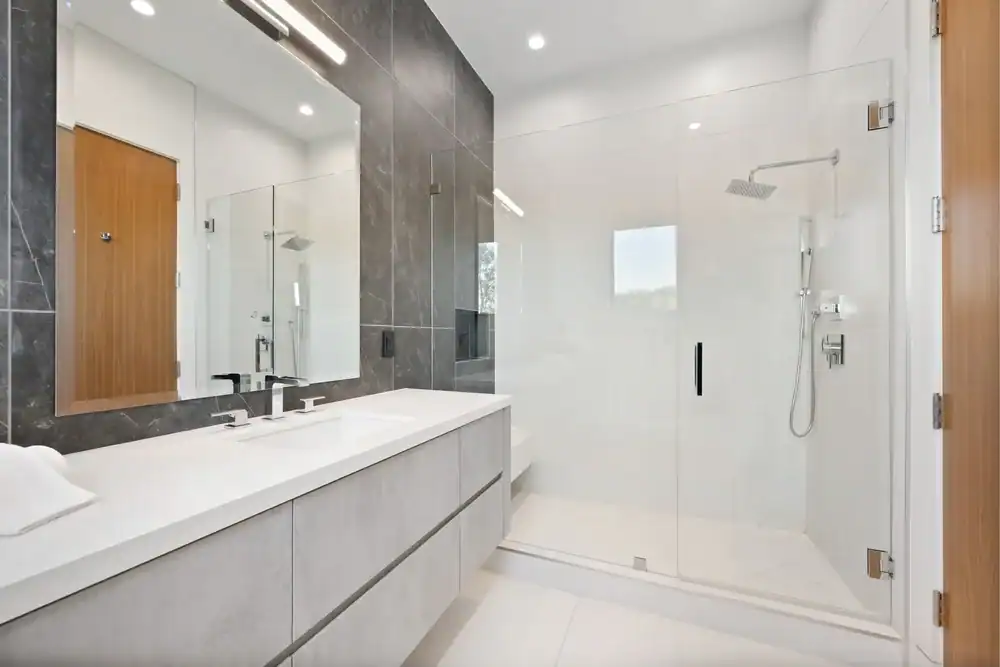
Frameless doors create a more open, modern look and are significantly easier to clean since there are no frame crevices where soap scum can accumulate. They use thicker tempered glass (3/8″ to 1/2″) and rely on precise installation rather than frames for support. This makes them more expensive but also more durable in the long run.
For Long Island homes, consider your bathroom’s size and style when choosing. Smaller bathrooms often benefit from the open feel of frameless doors, which can make the space appear larger. Traditional or transitional bathrooms might look better with framed doors that complement other fixtures and finishes.
Semi-frameless doors offer a middle ground—they typically have frames around fixed panels but frameless door sections. This gives you some of the open feel of frameless design while maintaining the structural support and water containment of frames. They’re also easier to repair if components wear out over time.
Think about maintenance too. If you hate scrubbing shower doors, frameless options require less effort to keep clean. If you prefer lower upfront costs and don’t mind occasional deep cleaning of frame crevices, framed doors work well and last for decades with proper care.
Custom Glass Shower Enclosures vs Prefabricated Options
Custom glass enclosures offer unlimited design possibilities but come with higher costs and longer lead times. Every piece is measured and fabricated specifically for your space, allowing for unique configurations that work around existing fixtures, sloped ceilings, or unusual dimensions common in older Long Island homes.
The custom approach works especially well if you’re dealing with non-standard spaces or want specific features like curved glass, etched patterns, or unusual door configurations. Lead times typically run 2-4 weeks for custom glass work, and costs can be 50-100% higher than prefabricated options.
Prefabricated shower surrounds and doors offer faster installation and lower costs. Modern prefab options come in numerous styles, colors, and finishes that can complement most bathroom designs. They’re particularly good choices if you’re working within a standard shower opening and want to complete your conversion quickly.
Quality varies significantly in prefabricated products. Higher-end acrylic and composite materials can look nearly as good as custom tile work while offering superior water resistance and easier maintenance. Cheaper options may look obviously prefabricated and could show wear more quickly.
Consider your home’s value and your long-term plans when choosing between custom and prefabricated options. If you’re planning to sell within a few years, prefabricated solutions might make more sense financially. If you’re staying long-term and want exactly what you envision, custom work often provides better satisfaction despite the higher initial investment.
The installation complexity differs too. Prefabricated surrounds can often be installed in a single day, while custom tile work requires multiple days for proper curing and finishing. We can help you understand which approach makes sense for your timeline and budget.
Making Your Tub to Shower Conversion Decision
A tub to shower conversion can solve multiple problems—safety, space utilization, and outdated aesthetics—while adding value to your Long Island home. The key is understanding the permit requirements, realistic costs, and design trade-offs before you start.
Work with contractors who understand Nassau and Suffolk County building codes and have experience with local permit processes. Get detailed estimates that include all costs—permits, materials, labor, and any necessary plumbing modifications. Don’t forget to factor in the timeline for permits and custom materials if you choose that route.
Whether you choose frameless or framed doors, custom or prefabricated surrounds, focus on quality installation and materials that will serve you well for decades. When you’re ready to move forward with your conversion, we have the local expertise and track record to guide you through every step of the process.